








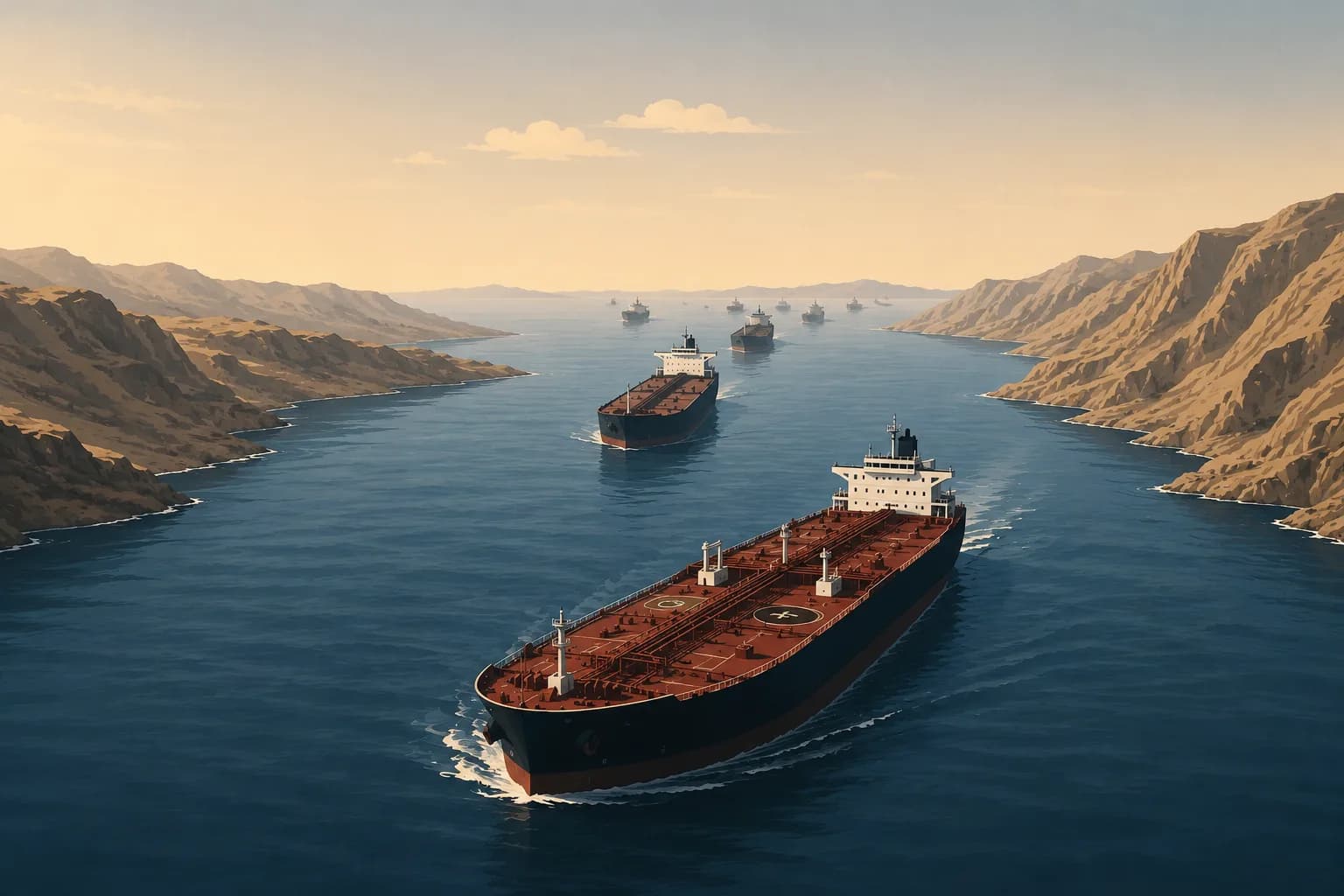













Shipping through the Strait of Hormuz has slowed to a near standstill after the United States carried out fresh strikes on Iran, deepening fears over one of the world’s most critical energy chokepoints.
Vessel-tracking data shows traffic largely confined to an Iran-designated northern lane, while the southern Omani route sees little activity.
The latest round of tension came after renewed attacks on vessels in the waterway. Ship crossings in Hormuz dropped to 25 on July 8, below the average of 30 to 50 transits seen on days preceding the latest round of escalations.
Also Read | Fresh US strikes hit Iran: At least 14 killed near Ahvaz, 78 injured
🚨 BREAKING: At the direction of President Trump, the US forces are conducting MORE strikes on Iran to “further degrade their ability to threaten freedom of navigation in the Strait of Hormuz,” CENTCOM confirms
— Nick Sortor (@nicksortor) July 8, 2026
47 gave them fair warning. Iran decided to ignore him.
I’d imagine… pic.twitter.com/pZKmYYtLLU
Storm clouds gather over the Gulf
The slowdown comes after a fresh cycle of military action in and around the Gulf. Iran targeted US military infrastructure in Kuwait, Qatar and Bahrain on Thursday, while the US said its latest strikes were aimed at keeping the strait open after Iran targeted three tankers in the area.
President Donald Trump said he believed the interim ceasefire with Iran was “over”. The flare-up has put additional strain on the three-week-old ceasefire arrangement.
The Strait of Hormuz handled about a fifth of global oil supplies before the war erupted on February 28, underlining why even a brief disruption quickly ripples through energy markets and shipping networks.
🇮🇷 The U.S. hit Iran's Chabahar port overnight, and this footage shows what's left of its maritime control tower.
— Mario Nawfal (@MarioNawfal) July 9, 2026
The tower ran ship traffic in and out of Iran's only deep-water ocean port, the one that lets it bypass the Strait of Hormuz entirely.
Taking it out is aimed…
No easy voyage from here
The impact is being felt at sea as well as in diplomacy. At least four oil and gas tankers turned back from attempting to transit the strait after attacks on vessels heightened security concerns. Only a US-sanctioned supertanker and an Iranian-flagged container vessel were observed transiting the passage.
The International Maritime Organisation warned of the human cost of the disruption. Secretary-General Arsenio Dominguez said, “These reckless attacks have again placed innocent seafarers in grave danger. No seafarer should have to risk their life simply for doing their job.”
Around 6,000 sailors remained trapped in and around the strait.
Iran's Forceful Command of the Hormuz is Working
— Ryan Rozbiani (@RyanRozbiani) July 9, 2026
Despite the U.S. attacks, Iran's strikes on the ships taking the Omani route has worked. Only ONE SHIP took the Omani route yesterday. The rest took the Iranian Route.
I still stand by Oman betrayed Iran with these routes they… pic.twitter.com/TLEbjkNuog
The world’s oil lifeline holds its breath
The maritime slowdown has been accompanied by sharper warnings from both sides. The disruption followed US strikes on about 90 targets inside Iran, with bridges, docks and airports being hit. Iran’s Revolutionary Guard Corps responded by targeting US facilities in the Gulf.
Iran’s top negotiator Mohammad Baqer Qalibaf said, “The Strait of Hormuz will be reopened only under Iranian arrangements, not through US threats.”
With the corridor now operating under heavy security pressure and traffic reduced to a fraction of normal levels, shipping companies, energy traders and insurers are bracing for more volatility.
Also Read | New Zealand PM says 57% of exports to India will be ‘tariff-free from day one’
FAQs
Q1: Why is shipping through the Strait of Hormuz slowing down?
Shipping has slowed after renewed Iran-US military strikes and attacks on vessels raised security concerns in one of the world’s busiest oil transit routes.
Q2: Why is the Strait of Hormuz important to global energy markets?
The Strait of Hormuz is a key maritime chokepoint through which roughly one-fifth of the world’s oil supply is transported.