







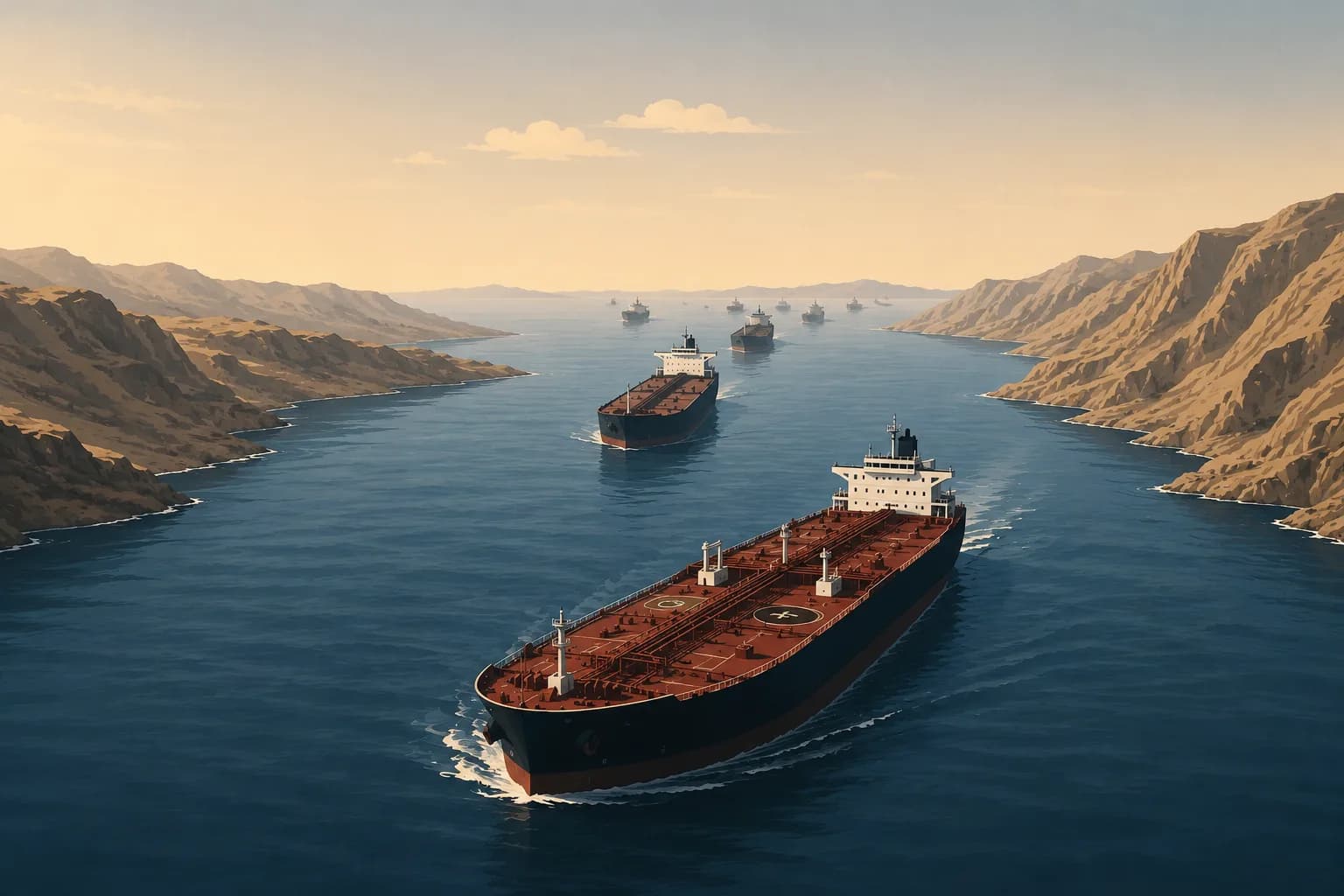
















The movement of two India-flagged crude oil tankers through the Strait of Hormuz has offered some relief amid heightened security concerns in one of the world’s most critical energy corridors.
The development comes days after attacks on commercial vessels in the region prompted India to intensify monitoring of maritime traffic, shipping operations and the safety of Indian crew members.
Also Read | Jaipur Class 4 student suicide: Family releases CCTV, alleges bullying and school inaction
A voyage watched with bated breath
According to officials, the India-flagged tanker Lila Vadinar, carrying around 270,000 tonnes of crude oil from Kuwait, successfully crossed the Strait after it was briefly intercepted by Iran’s Sepah Navy near Oman’s Musandam Peninsula before being allowed to continue its voyage.
A second India-flagged vessel, Maha Roos, also completed its transit through the strategic waterway.
The sea grows uneasy
The latest crossings come against the backdrop of escalating tensions following attacks on commercial shipping in the Strait. Maritime authorities and governments have reported a sharp decline in vessel movements through the route.
Several ships have altered sailing patterns or reduced the use of public tracking systems while operating in the area.
Why is India keeping such a close watch?
India has reiterated its opposition to attacks on civilian shipping. At the United Nations earlier this year, India’s Permanent Representative, Parvathaneni Harish, described attacks on commercial vessels and interference with freedom of navigation as “unacceptable”.
He said targeting civilian crews and disrupting maritime trade cannot be justified, underscoring the importance of keeping global energy and supply chains secure.
The government is also keeping a close watch on Indian nationals working aboard vessels operating in and around the Gulf. Reportedly, around 198 Indian seafarers are on board nine tankers in the vicinity of the Strait of Hormuz. New Delhi is assessing the evolving security situation while remaining in contact with relevant stakeholders.
Officials have not reported any casualties involving Indian crew members in the latest developments.
IMO Secretary-General Arsenio Dominguez urged restraint and called on all parties to prioritise the safety of merchant ships and their crews as tensions continue to affect one of the world’s busiest maritime trade routes.
Also Read | Delhi’s global liveability ranking raises fresh questions on urban infrastructure
FAQs
Q1: Why is the Strait of Hormuz important for India?
The Strait of Hormuz is a key global shipping route through which a large share of India’s crude oil imports and international energy supplies pass.
Q2: How many Indian seafarers are near the Strait of Hormuz?
According to official reports, 198 Indian seafarers are aboard nine tankers operating near the Strait of Hormuz.