

























Kharif crop sowing across the country remains behind last year’s pace, although recent improvement in monsoon activity over central and southern India is expected to support planting in the coming weeks, particularly for pulses and oilseeds.
According to the Agriculture Ministry, farmers had sown crops across 35.08 million hectares (Mha) as of Monday, around 21 per cent lower than the corresponding period last year. The area covered so far accounts for nearly 32 per cent of the normal kharif sowing area of 110 Mha, compared with over 40 per cent by the same time in 2025, per a report by Financial Express.
Also Read | Heavy rain batters India: Floods, landslides hit states; Maharashtra death toll at 16
Rice, pulses and oilseeds lag behind
The report stated that paddy cultivation has reached 6 Mha, about 13 per cent lower year-on-year. The slower progress has largely been linked to below-normal rainfall in eastern states, particularly Bihar and Jharkhand. The normal paddy cultivation area for the season is 41.2 Mha.
Pulses have been sown over 3.71 Mha, reflecting a 22 per cent decline from a year ago. Tur (pigeon pea), one of the major kharif pulse crops, has covered 1.23 Mha so far, more than 40 per cent lower than the same period last year. Weak monsoon conditions in Maharashtra and Karnataka during June affected sowing activity.
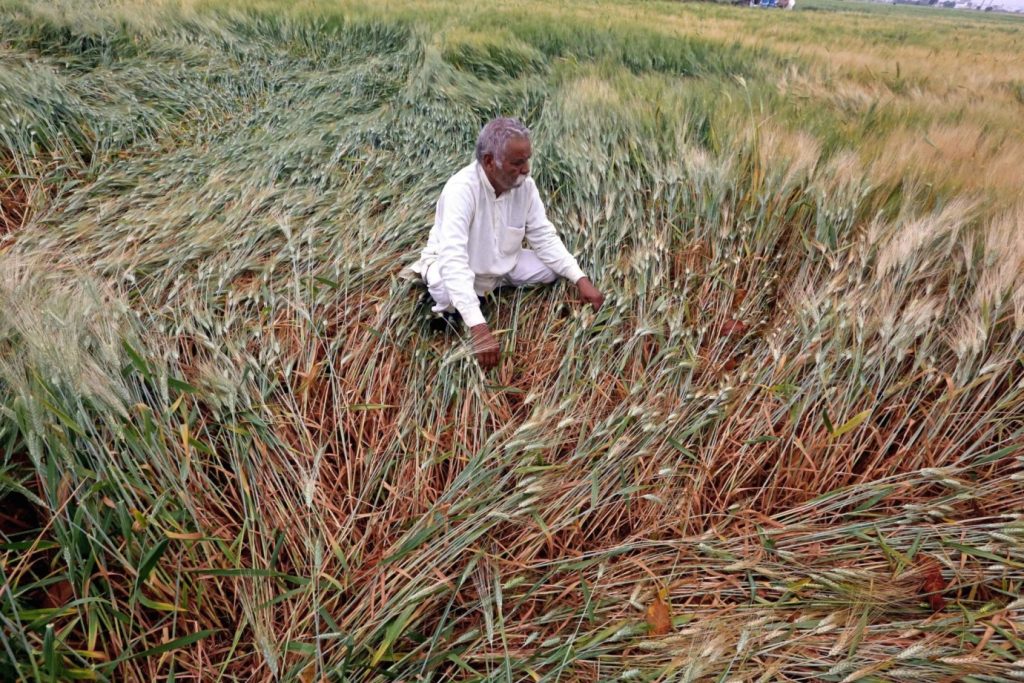
Oilseed cultivation has also been delayed. Soybean and groundnut acreage is down 35 per cent year-on-year, mainly because of inadequate rainfall in Gujarat and Madhya Pradesh during the early part of the monsoon season. Cotton planting has also slowed, with acreage standing at 6.31 Mha, a decline of 23 per cent.
Active monsoon expected to improve sowing
The recent revival of the southwest monsoon has reduced the rainfall deficit in central India to 5 per cent, down from more than 50 per cent at the end of June. Officials expect this improvement to encourage fresh sowing of pulses and oilseeds over the next few weeks. Sugarcane remains the only major kharif crop to record an increase in cultivated area.
Also Read | Mumbai-Pune Expressway reopens after landslide debris cleared; MSRDC completes safety checks
According to the India Meteorological Department (IMD), cumulative rainfall between June 1 and July 6 stood at 170.7 mm, which is still 20 per cent below the long period average. Region-wise, rainfall remains below normal in northwest India (-19 per cent), east and northeast India (-41 per cent), central India (-5 per cent) and the south peninsula (-15 per cent).
Daily Weather Briefing (06.07.2026)
— India Meteorological Department (@Indiametdept) July 6, 2026
Monsoon conditions are likely to be in active phase over central parts of the country during next 3 days.
YouTube : https://t.co/XWdVe9d4oy
Facebook : https://t.co/1DCQCBxf4g
For more information, visit Us : https://t.co/wV5bB4nhOG… pic.twitter.com/L4pvllToaC
Despite above-normal rainfall in early July helping narrow the seasonal deficit, the IMD has forecast below-normal rainfall for the month, attributing the outlook to evolving El Niño conditions over the Pacific Ocean.
FAQs:
Why is kharif sowing lower this year?
Below-normal rainfall in June delayed the sowing of paddy, pulses, cotton and oilseeds in several states.
Will the recent monsoon revival improve kharif sowing?
Officials expect active monsoon conditions to boost pulses and oilseed sowing in the coming weeks.