




















After the Mumbai-Ahmedabad bullet train, the Centre is now shifting its focus towards the national capital with an ambitious expansion of India’s high-speed rail network. The proposed Delhi bullet train projects include four major corridors connecting Delhi with Uttar Pradesh, Bihar, West Bengal, Rajasthan, Gujarat, Punjab and Jammu. Although none of the routes has entered the construction stage, surveys, route planning and design work have already begun for several corridors.
The proposed network forms part of the Centre’s long-term vision to modernise rail travel, with an estimated investment of nearly ₹2 lakh crore across seven priority high-speed rail corridors announced in the Union Budget.
Delhi bullet train projects to connect key regions across India
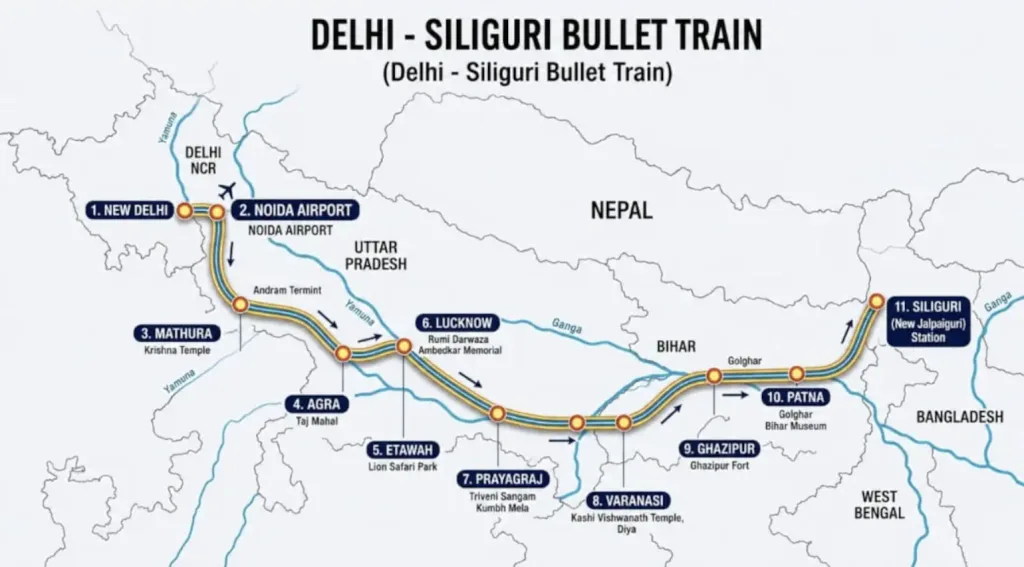
Among the proposed routes, the Delhi-Varanasi-Siliguri corridor is expected to become India’s longest high-speed rail line. Stretching nearly 1,705 kilometres, the corridor is planned to connect Delhi with Noida, Agra, Lucknow, Varanasi, Patna, Katihar and New Jalpaiguri before reaching Siliguri. There is also a proposal to extend the line further to Guwahati in the future.
If completed, the corridor could reduce travel time between Delhi and Siliguri from nearly 20 hours to about six hours.
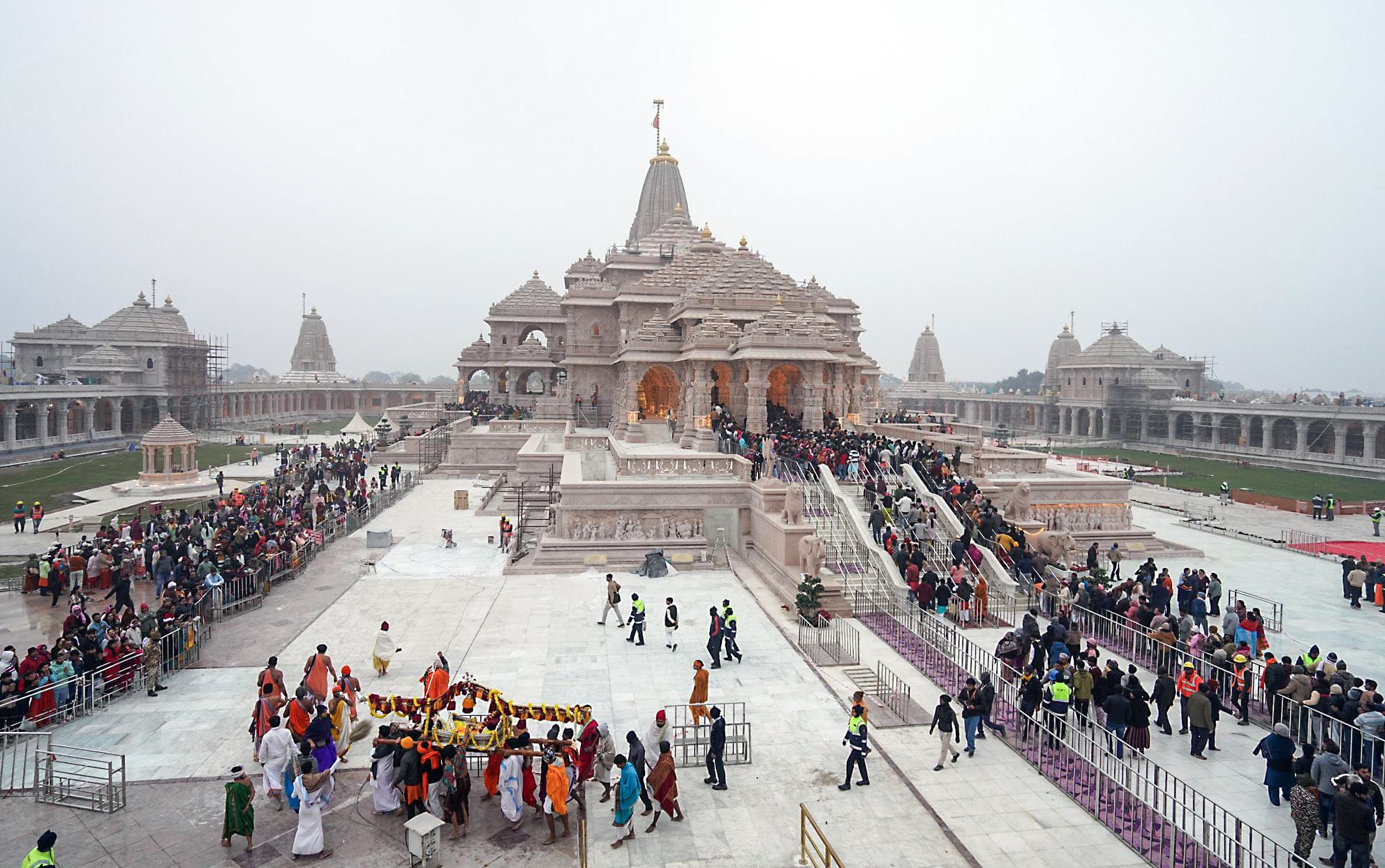
Another key proposal under the Delhi bullet train projects is the Delhi-Lucknow-Varanasi corridor. The route is expected to pass through Noida, Jewar International Airport, Mathura, Agra, Etawah, Kannauj, Lucknow, Rae Bareli, Prayagraj and Varanasi. A separate high-speed link between Lucknow and Ayodhya has also been proposed.
Bullet trains on this corridor are expected to operate at speeds of up to 320 kmph, reducing the Delhi-Lucknow journey to just over two hours and the Delhi-Varanasi trip to less than four hours.
Also Read | Delhi may roll out ₹2,500 aid for women on Raksha Bandhan
Rajasthan, Gujarat and Punjab also part of expansion plans
According to NDTV, the Delhi bullet train projects also include a high-speed corridor linking Delhi with Jaipur, Udaipur and Ahmedabad. The proposed line will eventually integrate with the Mumbai-Ahmedabad bullet train, enabling seamless high-speed travel between Delhi and Mumbai. While the Detailed Project Report has been prepared, financial approvals are still awaited.
Another proposed route will connect Delhi with Amritsar through Haryana and Punjab. The corridor is expected to pass through Rohtak, Chandigarh, Ludhiana and Jalandhar before reaching Amritsar, with a possible future extension to Jammu and Katra. Once operational, the journey between Delhi and Amritsar could be completed in around two hours.
Also Read | INS Mahendragiri set to strengthen Indian Navy under Project 17A
Surveys underway as India expands high-speed rail ambitions
According to NDTV, unlike the Mumbai-Ahmedabad bullet train, which is expected to begin partial operations in 2027, the Delhi bullet train projects remain at different stages of planning. The National High Speed Rail Corporation Limited has already floated tenders for civil design work on the Delhi-Lucknow-Varanasi route, while surveys and feasibility studies continue for the remaining corridors.
The government also plans to construct nearly 250 kilometres of high-speed rail every year and is developing its first indigenous high-speed train, the B35. If these plans move forward as scheduled, the Delhi bullet train projects could redefine long-distance travel across northern and eastern India while significantly boosting economic and regional connectivity.