

























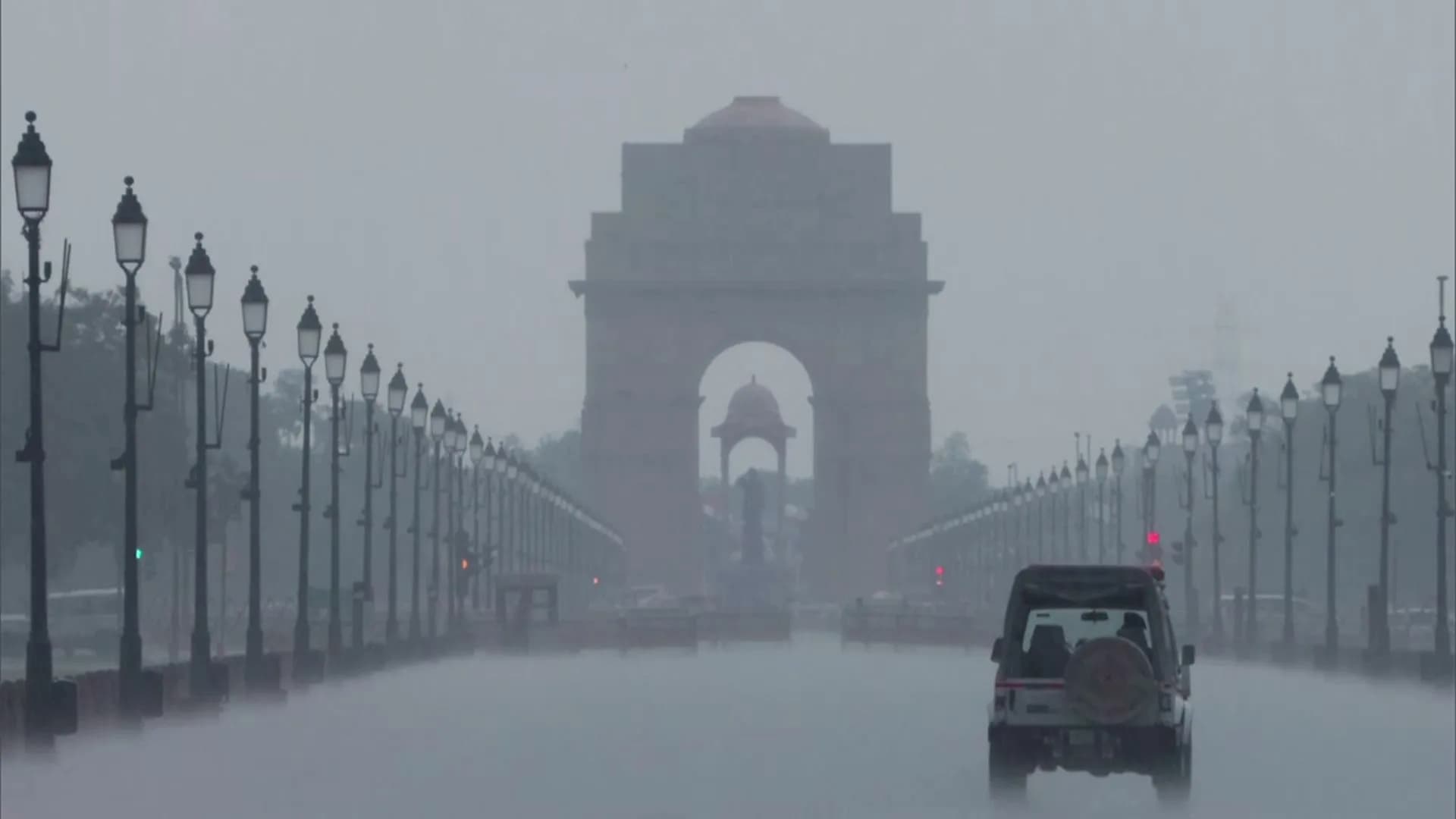
Delhi-NCR heavy rain has brought traffic to a crawl, waterlogging to several neighbourhoods and fresh relief from soaring temperatures. Areas including Noida, Ghaziabad, Faridabad and East Delhi have witnessed intense showers, while parts of central and west Delhi received comparatively lighter rainfall. According to weather experts, the current spell has been triggered by a combination of a well-marked low-pressure area and a favourable monsoon trough, two key weather systems that play a crucial role during India’s rainy season.
Delhi-NCR heavy rain linked to active low-pressure area
According to the Hindustan Times, the Delhi-NCR heavy rain is being driven by a well-marked low-pressure area currently positioned over northeast Madhya Pradesh and adjoining southeast Uttar Pradesh. A low-pressure area forms when atmospheric pressure drops below the surrounding region, causing air to rush inward.
As the incoming air converges and rises, it cools, leading to condensation and cloud formation. Once sufficient moisture accumulates, widespread rainfall follows. Meteorologists say the current weather system has moved close enough to Delhi-NCR to produce continuous showers across the region.
Also Read | IMD issues landslide warning for Shimla, Himachal districts

Monsoon trough playing a major role
According to the Hindustan Times, apart from the low-pressure area, the Delhi-NCR heavy rain is also being supported by the monsoon trough, an elongated zone of low pressure that stretches across northern India during the southwest monsoon.
The position of this trough determines where the heaviest rainfall occurs. When it shifts southward, rainfall activity increases across northern and central India. When it moves towards the Himalayan foothills, the plains often witness a temporary break in monsoon rainfall.
Weather experts say the trough is currently positioned favourably for Delhi-NCR, allowing the active weather system to deliver sustained rainfall.

Rain likely to continue for now
According to the Hindustan Times, forecasts suggest the Delhi-NCR heavy rain could persist over the next day as the low-pressure system remains active. While the showers have provided relief from humid conditions, authorities continue to monitor waterlogging and traffic disruptions across the region.
Meteorologists expect rainfall intensity to gradually reduce once the low-pressure system weakens or the monsoon trough shifts northwards. Until then, residents have been advised to remain cautious while travelling, particularly through waterlogged roads and low-lying areas.
The ongoing Delhi-NCR heavy rain highlights how the interaction between low-pressure systems and the monsoon trough continues to shape weather patterns across northern India during the peak monsoon season.