
























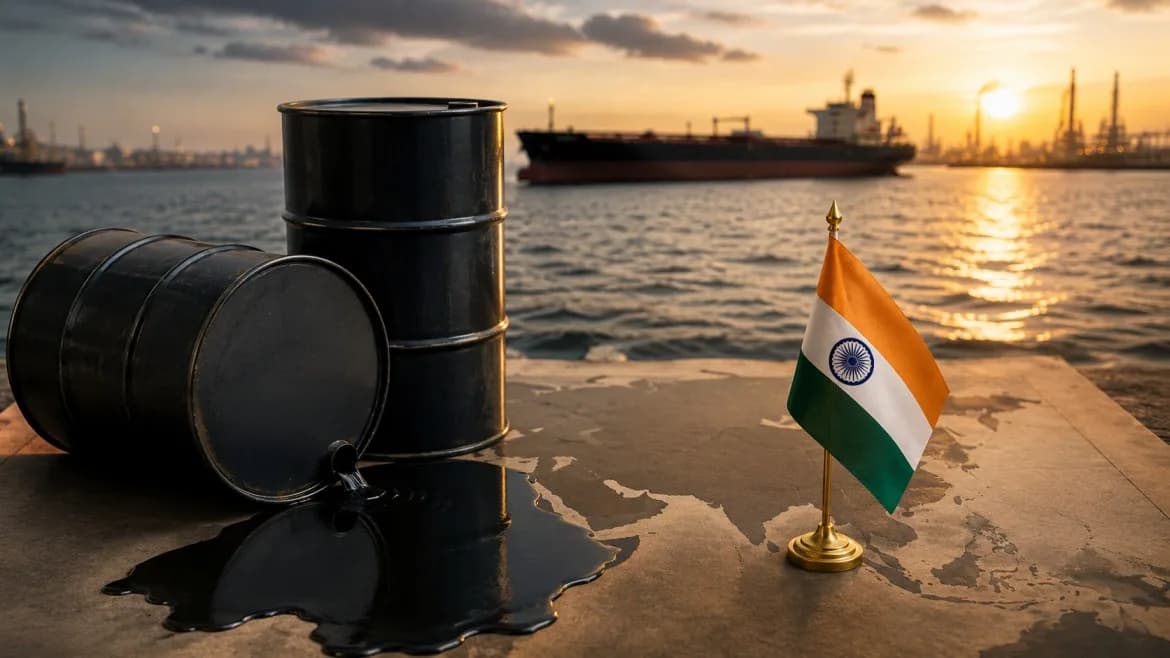
The US has withdrawn a temporary sanctions waiver that had allowed Iran to export crude oil and petroleum products, hours after fresh military strikes on Iran and attacks on commercial tankers in the Strait of Hormuz. While the move marks another escalation in tensions, analysts believe India’s immediate oil supply is unlikely to face major disruption.
The waiver, introduced under the June 17 memorandum of understanding between Washington and Tehran, had permitted Iran to legally sell crude oil, petrochemicals and refined petroleum products until August 21, 2026. However, the licence has now been revoked by the US Treasury.
Statement by the Ministry of Foreign Affairs of the Islamic Republic of Iran on the United States' Explicit Violation of Article 10 of the Islamabad Memorandum of Understanding
— Iran in India (@Iran_in_India) July 7, 2026
July 8, 2026
(Unofficial Translation)
The Ministry of Foreign Affairs of the Islamic Republic of Iran… pic.twitter.com/IaON7Cv65K
Why the waiver mattered
The temporary relief had briefly reopened the possibility of Iranian crude returning to global markets, including India. But Indian refiners had already secured cargoes for July and August from other suppliers before the waiver was announced, per a report by Financial Express.
Also Read | US resumes strikes on Iran, withdraws oil sanctions waiver with immediate effect
At the same time, lower prices for Middle Eastern crude and continued discounted supplies from Russia reduced the need for Indian refiners to source oil from Iran. Although India had imported limited quantities of Iranian crude during an earlier sanctions exemption and both countries discussed energy cooperation during the BRICS Energy Summit, the latest US move has effectively closed that option for now.
Any Indian company importing Iranian crude could again risk secondary US sanctions.
India’s supply remains secure
Industry experts cited by Financial Express say India entered this phase with comfortable supplies already in place.
According to Kpler analyst Sumit Ritolia, Indian refiners imported a record 4.93 million barrels of crude per day in June, while Russian oil remained the country’s largest source at around 2.6 million barrels daily.
Since refiners typically purchase crude one to two months in advance, much of India’s demand for July and the first half of August has already been covered.
“At this stage, we do not expect any meaningful increase in Iranian crude imports into India. Even if limited cargoes materialise, Indian refiners are already largely covered through the first half of August, leaving little immediate need for additional purchases,” Ritolia was quoted as saying by Financial Express.
What could change next?
Although there is no immediate concern over availability, the latest escalation has renewed worries over global shipping.
Also Read | PM Modi says India believes in prosperity, not expansionism at Indonesia Parliament
The Strait of Hormuz remains one of the world’s most critical energy corridors, handling nearly one-fifth of global oil and LNG trade. Any prolonged disruption could raise freight charges, insurance premiums and the overall cost of future crude imports.
India, however, has diversified its sourcing over the past few years, importing crude from more than 40 countries. Analysts also note that Iran’s own oil exports have declined sharply in recent months, making it unlikely to become a major supplier to India even if sanctions had remained in place.
FAQs:
Has the US officially ended the Iran oil waiver?
Yes. The US Treasury has revoked the temporary waiver that allowed Iran to legally export oil.
Will India’s crude oil supply be affected immediately?
Analysts say no, as Indian refiners have already secured supplies for July and much of August from other sources.