























Autonomous-driving startup Wayve is seeking to widen its foothold in the industry after raising $2.8 billion from investors and strategic partners, including Nvidia, Mercedes-Benz, and Nissan.
The London-based company said in June that its system will be deployed in Stellantis robotaxis that will operate on Uber’s ride-hailing network, underscoring growing commercial interest in a technology the startup says can learn to drive in a more humanlike way.
Also Read | Will WhatsApp usernames become the next tool for online scammers?
The autonomous vehicle race is starting to look a lot bigger than Tesla.
While Tesla has built autonomy around its own vehicles and its own data loop, Wayve is taking a broader approach: develop an AI driving system that can work across OEMs, vehicle platforms, and markets.… pic.twitter.com/ofWBEgLPkm— ASOTU | More Than Cars (@asotu_) June 29, 2026
A clever contraption with lofty ambitions
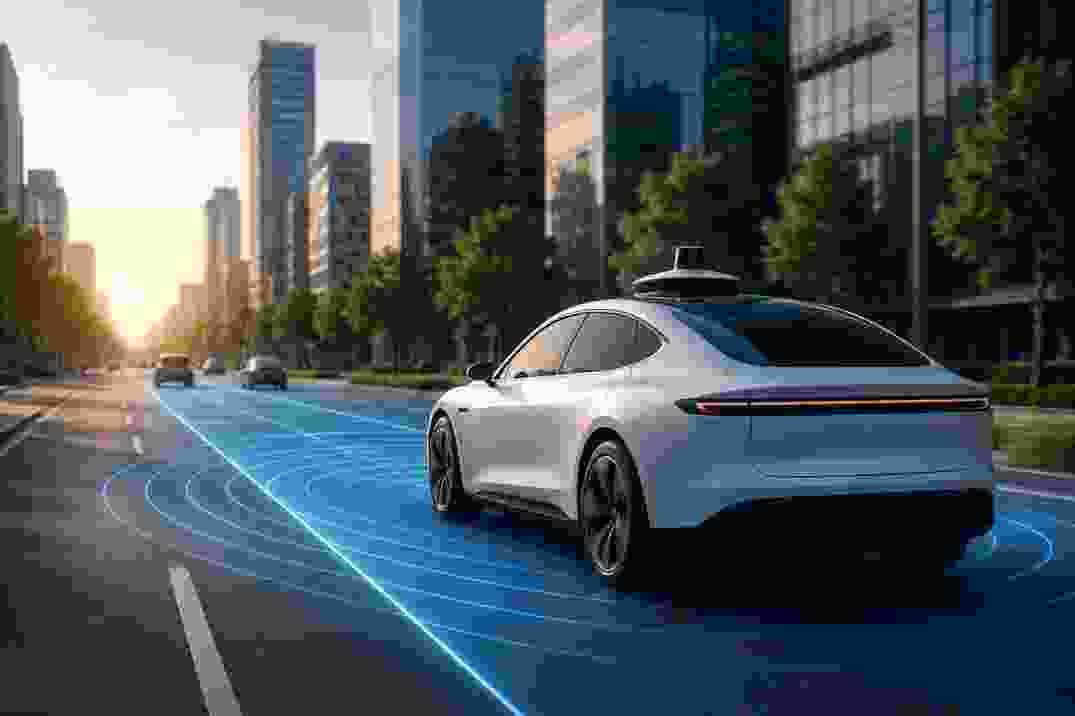
Wayve’s core pitch is an end-to-end machine-learning system that converts sensor data directly into driving decisions, rather than relying on a combination of AI, software code, and high-definition maps to follow preset rules.
Chief executive Alex Kendall, who co-founded the company in 2017, said the aim is to make full self-driving possible “for any vehicle, any brand, and anywhere around the world.” Wayve says the architecture is built to work with a wide range of sensors and AI chips, which it argues makes the technology more adaptable than rival systems that depend on narrower hardware setups.
Wayve just proved that the era of rule based autonomous driving is officially over.
The London based startup has hit a staggering 8.5 billion dollar valuation. This milestone highlights the massive industry shift toward embodied AI where vehicles learn to navigate the world… pic.twitter.com/JF5NTJHFVT— AIQUEST (@AiquestAcademy) July 1, 2026
The tide turns for driverless dreams
The company’s timing appears to be helped by renewed momentum in autonomous vehicles, driven in part by Waymo’s expansion.
Alphabet’s self-driving unit now offers paid rides in about a dozen cities after more than a decade of development. The progress has helped revive investor appetite for driverless-car developers. Wayve says its system has been tested in hundreds of cities around the world without the need to first map roads or write location-specific code, a process Kendall says could help the company expand quickly into new markets such as Tokyo, Stuttgart, and Vancouver.
The proof, as ever, lies on the road
Still, Wayve’s approach faces the same challenge confronting much of the sector: proving safety at scale.
The company acknowledges that end-to-end models are not enough on their own to guarantee safety, while Nissan’s technology chief Eiichi Akashi said his team is still evaluating Wayve’s system ahead of a planned rollout in Japan by the year ending March 2028.
Outside experts said end-to-end systems may be faster to develop and deploy, but they also cautioned that no single method has yet been shown to be clearly safer across the board.
FAQs
Q1: What is Wayve’s AI driving system?
Ans: Wayve’s AI driving system is an end-to-end autonomous driving model that learns from real-world driving data to make driving decisions without relying heavily on pre-mapped roads or rule-based programming.
Q2: Why is Wayve partnering with automakers?
Ans: Wayve is working with automakers to integrate its AI-powered autonomous driving technology into future vehicles and robotaxi services across multiple markets.