






















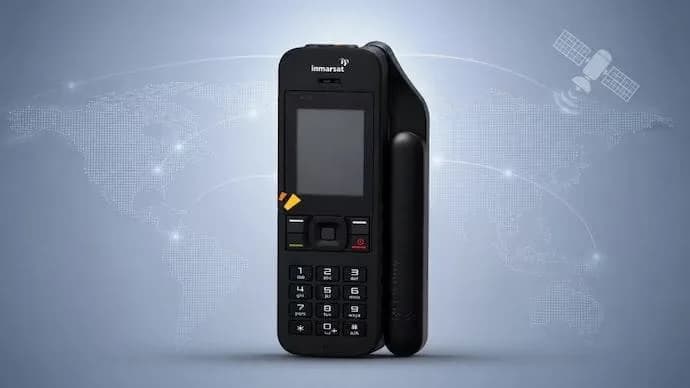
The Bharat Sanchar Nigam Limited (BSNL) has launched a new satellite phone for “challenging environments,” adding another product to the PSU’s portfolio.
Taking to X on Thursday, BSNL said the new satellite phone was designed as an “ideal solution” for defence, maritime, disaster response, and other tough conditions.
“When conventional mobile networks can’t reach, the BSNL Satellite Phone keeps you connected. Designed for challenging environments, making it an ideal solution for Defence, Maritime, Disaster Response, Mining, Remote Operations and Adventure Travel,” the government company said in its statement.
This launch comes at a time when natural disasters like floods, landslides, and cyclones are becoming more frequent across India, often knocking out mobile towers and cutting off entire regions from communication.
The phone is priced at ₹ 1,34,166, inclusive of all relevant taxes.
Also Read | Maharashtra floods: 3,000 LPG cylinders drift into river
What features does the phone offer?
BSNL also shared several reasons why it believes consumers should choose its satellite phone service.
According to the company, the phone comes with a few key features:
Satellite connectivity
Voice calls from anywhere
Emergency support
Long battery life
Who can buy this phone, and how
The BSNL satellite phone is meant for defence and security personnel, including military and border forces.
It’s also aimed at people working in specialised sectors like maritime operations, mining, and disaster response, as well as personnel carrying out authorised field operations in deep off-grid locations where mobile towers can’t reach.
To legally buy the device or find out about authorisation requirements, you need to contact your nearest BSNL office or call the dedicated BSNL representative line.
Why is the usage of satellite phones so tightly regulated?
Satellite phone use is heavily restricted in India due to national security concerns. Under the Telecommunications Act 2023, a satellite phone cannot be legally operated in the country without a prior licence or a No Objection Certificate (NOC) from the Department of Telecommunications (DoT).
Rapid climate change has triggered more frequent floods, cyclones, and landslides; pushing rescue and disaster-response teams to rely more on satellite communication, since regular mobile networks fail in the middle of such emergencies.
Yet, Such devices pose a major challenge for law enforcement and intelligence agencies, since they bypass local telecom infrastructure and are harder to monitor.
Authorities in sensitive areas like Jammu and Kashmir follow a “zero tolerance” policy on these devices, to stop insurgents from using communication lines that can’t be tracked.
Security protocols around satellite phones were tightened after the 2008 Mumbai terror attacks. During the siege, terrorists used Thuraya satellite phones to stay in touch with handlers in Pakistan, which made it hard for Indian authorities to track and intercept their coordination in real time.
For foreign nationals, any satellite phone brought into the country must be declared to customs.
Failing to do so can lead to heavy fines and even arrest. Countries like the United States and the UK have issued advisories to their citizens on this front.
Also Read | Count Binface to challenge Nigel Farage in Clacton by-election after major parties stay away
FAQs
Q1: How much does the BSNL satellite phone cost?
The phone is priced at ₹ 1,34,166, inclusive of all relevant taxes.
Q2: What features does the phone offer?
The phone comes with satellite connectivity, voice calls from anywhere, emergency support, and long battery life.