













Iran began a week-long state funeral this week for Ayatollah Ali Khamenei, the supreme leader who governed the Islamic Republic for nearly four decades before he was killed on February 28 in the opening airstrikes of the US-Israeli war.
The strike also killed his wife and his son’s wife. Held four months on from his death, the ceremonies mark a moment when Iran’s leadership looks starkly different from the one it succeeds: younger, drawn more directly from the ranks of the Islamic Revolutionary Guard Corps, and, for now, still largely out of public view.
Also Read | Trump’s America 250 speech: ‘No dream in history is bigger’ than the American experiment
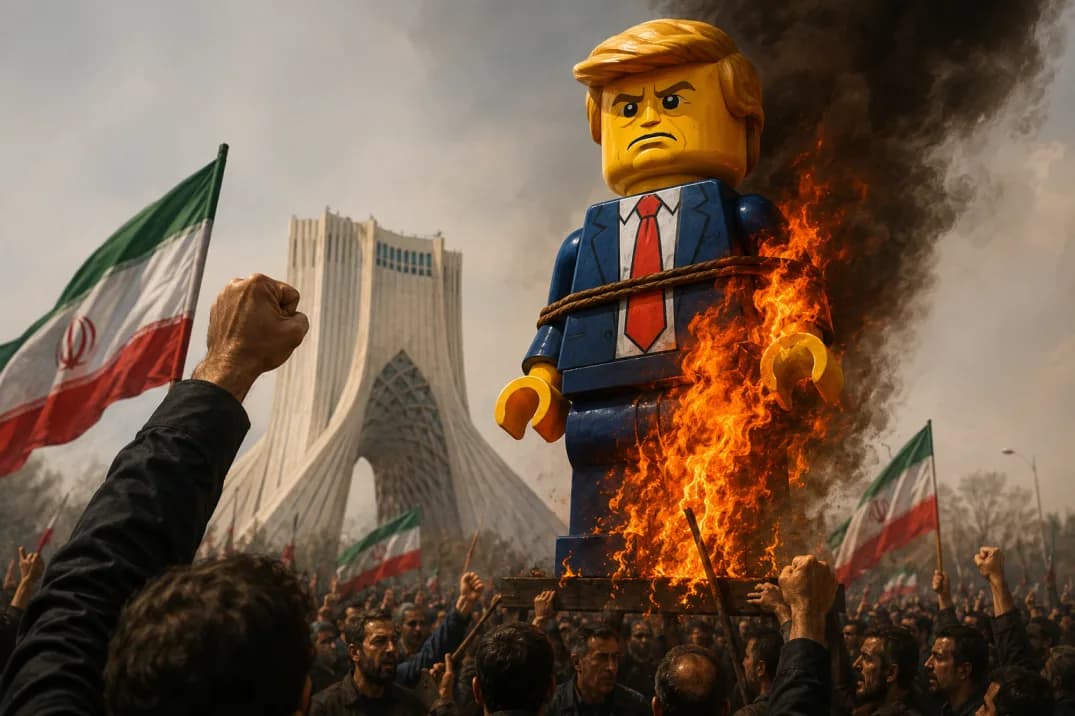
Pay attention to the "new regime" in Iran: "Death to America, death to America," the crowds at Khamenei's funeral, including signs "Kill Trump." pic.twitter.com/D9i9D8yu7j
— Eli Afriat 🇮🇱 (@EliAfriatISR) July 4, 2026
A crown passes, though the heir stays unseen
Under Iran’s constitution, a three-member council made up of President Masoud Pezeshkian, judiciary chief Gholam-Hossein Mohseni-Ejei, and Guardian Council representative Ayatollah Alireza Arafi briefly assumed the supreme leader’s powers after Khamenei’s killing before the Assembly of Experts named his son, Mojtaba Khamenei, 56, to the post on March 8.
Mojtaba had never previously held government office, and his succession marks only the second transfer of power in the post since Ayatollah Ruhollah Khomeini’s death in 1989, when Ali Khamenei himself first became supreme leader.
Mojtaba was wounded in the strike that killed his father and has not appeared in public since, communicating only through written statements carried by state media.
The first day of funeral rites at Tehran’s Grand Mosalla passed this weekend without any sign of him, even as large crowds gathered at the site, many beating their chests and chanting anti-American slogans.
Questions have persisted over his health and over who is effectively running the country in his absence.
🇮🇷 Iran just named a new IRGC Navy commander, the man who will control the Strait of Hormuz going forward.
— Mario Nawfal (@MarioNawfal) July 5, 2026
Ali Ozmaei is the replacement for Alireza Tangsiri, who was killed in an Israeli strike during the recent conflict.
Source: IRNA / Writer: Monica pic.twitter.com/2Uy2YecGsr
A younger guard takes the reins
At 56, Mojtaba is three decades younger than his father, who was believed to be in frail health by the time he was killed.
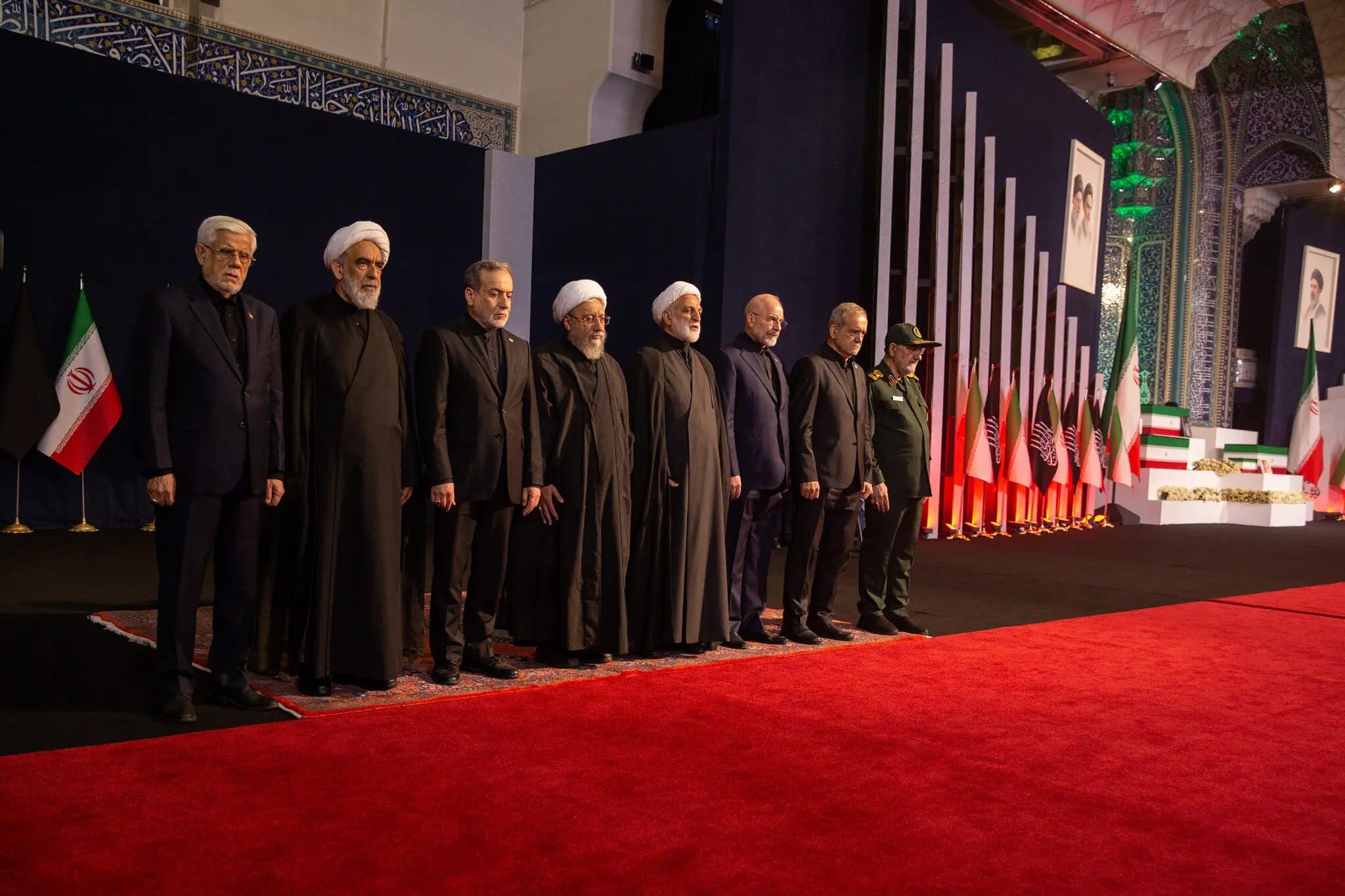
President Pezeshkian, at 71, is older still. He now shares the stage with men shaped less by the 1979 revolution than by the Revolutionary Guard itself. Among them, parliamentary speaker and chief negotiator Mohammad Bagher Ghalibaf and Revolutionary Guard commander-in-chief Ahmad Vahidi are both in their sixties.
Sanam Vakil, who directs the Middle East and North Africa program at Chatham House, describes this cohort as “children of the revolution” rather than its architects and argues that the elder Khamenei had for years acted as a brake on the system’s evolution, one that his death, however violent, has now removed.
🇮🇷 Mojtaba Khamenei, the new Supreme Leader, has not been seen in public since March.
— Mario Nawfal (@MarioNawfal) July 4, 2026
He wasn't at the memorial for his own wife and teenage son, killed on the war's first day when the family compound was bombed. Security officials are blocking his attendance at his father's… pic.twitter.com/ooF0zeS3aT
Solemn processions, guarded ambitions
Iranian authorities have declared Sunday a public holiday to accommodate the mourning. Officials say they expect up to 20 million people to take part in ceremonies. The crowd is due to move from Tehran to the religious center of Qom and then to shrine cities in Iraq over the coming days.
Talks between Iran and the United States, led on Tehran’s side by Ghalibaf, remain paused for the duration of the funeral, with a further round expected in Doha once mourning ends.
Security around the proceedings has been tightened considerably, with Iran’s Revolutionary Guard warning that any misstep would draw a forceful, unprecedented response, days after Israel’s defense minister suggested the new supreme leader was now a target.
Three sons of Iran’s late Supreme Leader, Ali Khamenei, Mostafa, Meysam, and Masoud Khamenei, appeared at this morning's funeral prayers in Tehran, while his successor and son, Mojtaba Khamenei, was absent.
— Tabz (@TabzLIVE) July 5, 2026
IRGC Commander-in-Chief Brigadier General Ahmad Vahidi was also seen in… pic.twitter.com/KRAzbiqqnN
The rhetoric grows sharper by the day
Trump has said that with Iran’s leaders gathered for the funeral, Washington could take them out with “one shot,” though he said the US would not do so because it still needed people to negotiate with.
Iran’s embassy in Armenia responded sharply on X, “You don’t understand these things because you have neither civilization nor history nor honor.”
Those exchanges underline the new regime’s central message. It is not merely surviving pressure from abroad but turning war, mourning, and defiance into a political narrative of its own.
Also Read | Ali Khamenei funeral draws crowds, but all eyes are on Mojtaba’s absence
FAQs
Q1: Why is Iran’s new regime considered different from the previous leadership?
Ans: Iran’s post-war leadership is seen as younger, more security-focused and shaped by the country’s recent conflict and leadership transition.
Q2: Who is leading Iran after Ali Khamenei’s death?
Ans: According to Iranian state authorities, Mojtaba Khamenei has assumed the role of supreme leader following Ali Khamenei’s death.