




















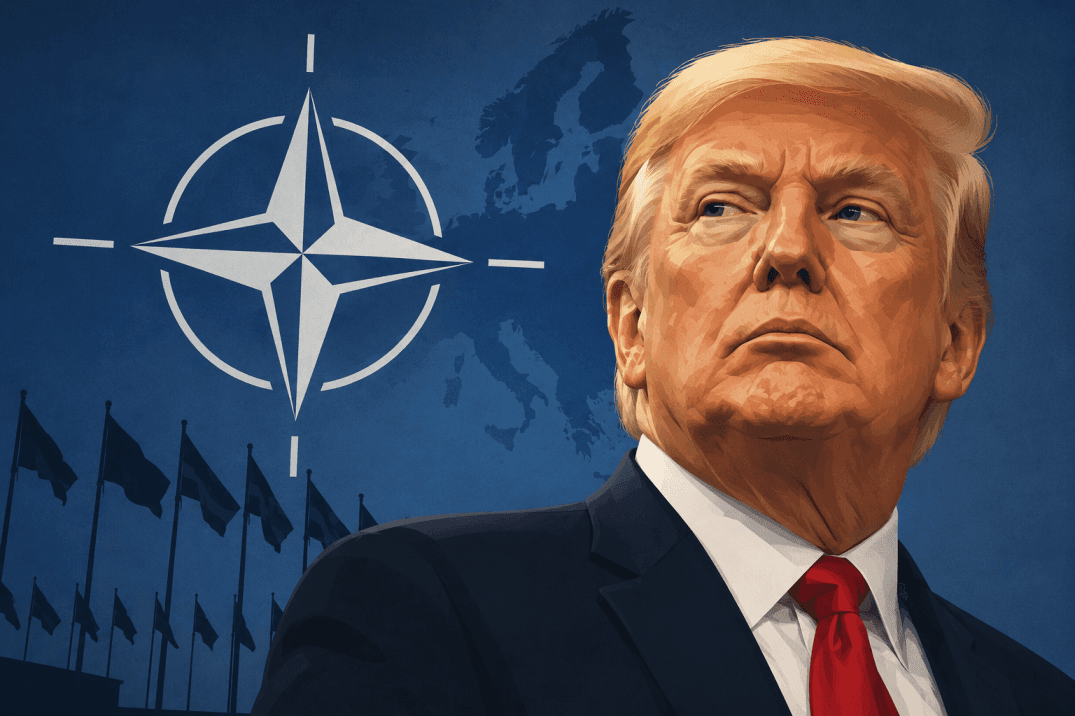
Since becoming NATO secretary-general almost two years ago, Mark Rutte has worked to keep the United States anchored to the alliance, using praise and carefully staged messaging to blunt Donald Trump’s long-running threats to pull away.
That effort has helped contain earlier disputes over burden-sharing, but the stakes heading into this week’s summit in Turkey have shifted.
Trump is no longer focused only on how much allies spend; he is pressing for political allegiance as well.
Also Read | Why China’s latest Pacific missile test is raising alarm
NATO's Rutte in Ankara:
— World Source News (@Worldsource24) July 6, 2026
You could argue that Trump is the third POTUS since Eisenhower who has been able to bring about a situation where the Europeans and the Canadians spend the same as the Americans. pic.twitter.com/dXPtueOtBK
A gilded pitch meets a stony reply
Rutte tried to reassure Trump at a White House meeting last month with a chart labelled “The Trump Trillion,” showing US $1.2 trillion in spending by European allies and Canada since 2017.
He also pointed to tens of thousands of US jobs and a backlog of US $300 billion in European orders for military equipment, framing the message as proof that allies were contributing more than before.
But Trump was unmoved. “We don’t need their money — we don’t need anything,” he said. “I just want loyalty.”
President Trump is leading the way. We're ready for this year's report card at the #NATOSummit to see where Allied commitments are turning into real capabilities. See you in Ankara. pic.twitter.com/bDn5nIveh6
— U.S. Ambassador to NATO (@USAmbNATO) July 6, 2026
The bill is paid, the test remains
The tension now goes beyond defense budgets that NATO allies addressed last year by agreeing to invest as much as the United States, in gross domestic product terms.
The harder question is whether that money can be turned into military capability at a time when European governments fear a possible Russian attack.
Meanwhile, Trump has repeatedly questioned NATO commitments, threatened to leave the alliance, floated pulling US troops out of Europe, and cast doubt on whether Washington would defend members that do not spend enough on their militaries.
🇺🇸🇹🇷 Trump told NATO allies in Turkey that America has dropped nearly $1 TRILLION on the alliance.
— Mario Nawfal (@MarioNawfal) July 6, 2026
He warned: No more free rides, or leave NATO.
“They were NOT THERE for us.”
Writer: Samuel
pic.twitter.com/JRH4ua6ZiJ
The alliance arrives at a delicate hour
The summit’s setting adds another layer of uncertainty. Trump suggested he might have skipped the meeting entirely if it were not being hosted by Turkish President Recep Tayyip Erdogan, whom he appears to regard unusually highly.
Erdogan’s ties to Trump, like Rutte’s own overtures, may help keep the American president engaged but not necessarily resolve the wider rifts inside the alliance.
NATO’s collective-security pledge under Article 5 remains central to the meeting, yet the alliance is under strain as Russia probes Europe’s defenses and the Pentagon scales back some of the forces it would provide in the event of an attack on an ally.
Also Read | Sri Lanka prison riot leaves 25 dead, over 100 injured after gang violence
FAQs
Q1: Why is Donald Trump demanding loyalty from NATO allies?
Ans: Trump has said he wants political loyalty from NATO members in addition to increased defence spending commitments.
Q2: What is the main focus of the NATO summit?
Ans: The summit is focused on alliance unity, defence spending, and strengthening NATO’s collective security amid concerns over Russia.