
















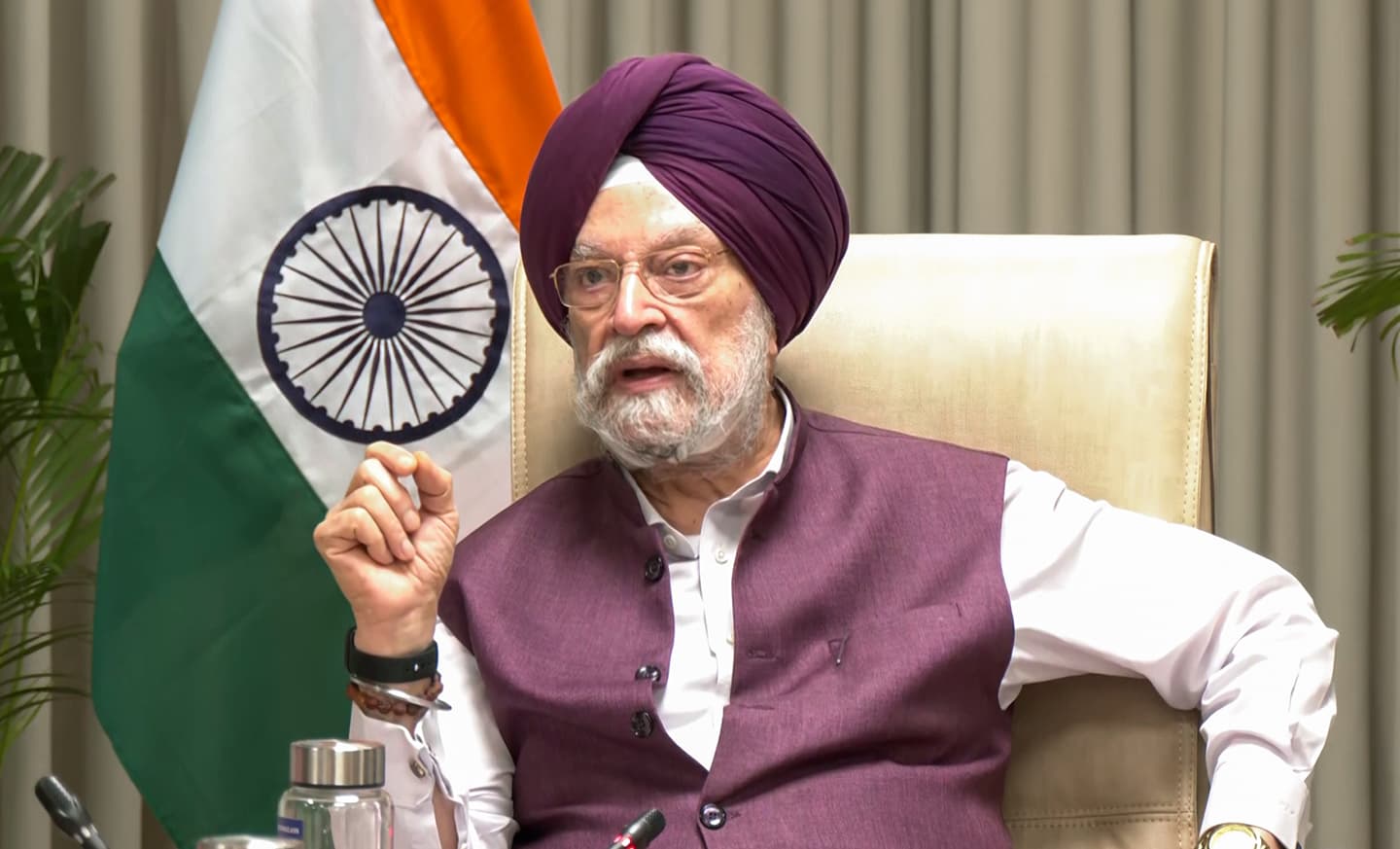
Hopes of cheaper petrol and diesel following the recent decline in global crude oil prices may have to wait, with Union Petroleum and Natural Gas Minister Hardeep Singh Puri indicating that fuel prices in India are unlikely to be cut immediately.
Commenting on the possibility of reduction in retail fuel prices, Puri said that fuel from the crude being purchased at inflated international prices is being sold by oil marketing companies and any respite to customers will depend upon stability of lower international prices.
Also Read | After WhatsApp, Telegram and Signal face government scrutiny
Why haven’t petrol and diesel prices reduced yet?
According to Petroleum Minister, the main cause for such an outcome is due to the time gap between the procurement of crude oil and the pricing of retail fuel.
Public sector oil companies like IOCL, BPCL and HPCL are now processing the crude oil that had been purchased at high prices due to geopolitical instability in West Asia.
Industry sources, as reported by PTI, had earlier said that retail fuel prices are based on average international crude prices over a fortnight or month.
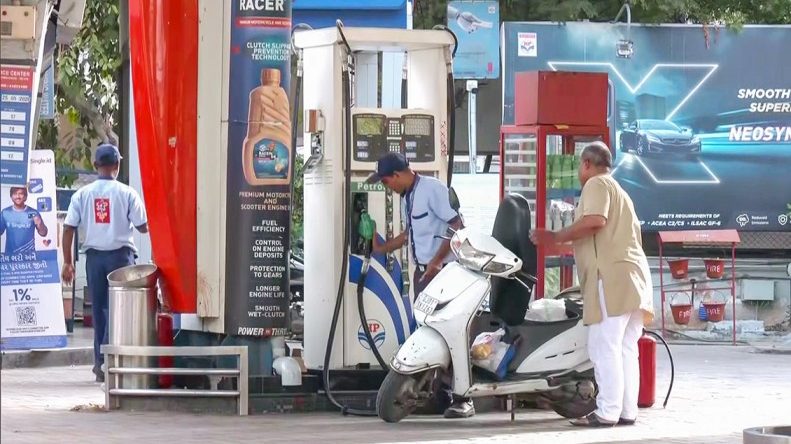
The government also pointed out that crude oil prices account for only one component of the retail fuel price. Refining costs, freight charges, dealer commissions, central excise duty and state taxes all contribute to the final amount consumers pay at petrol pumps.
Consumers may have to wait two to three months
Puri suggested that motorists could see relief only if international crude prices remain stable for an extended period.
“If this persists for the next two-three months, then that would be a legitimate question. But that’s hypothetical,” he said while responding to queries on potential fuel price cuts.
The minister’s remarks come after Brent crude prices retreated to levels seen before the recent geopolitical escalation in West Asia, reviving expectations of lower petrol and diesel prices in India.
Oil companies recovering from recent losses
Another factor delaying any reduction in fuel prices is the financial impact on state-run oil marketing companies.
As per Puri, loss of approximately ₹74,781 crore was made by public sector oil companies in the April-June quarter since they were supplying petrol, diesel, and LPG below cost amid high international crude oil prices.
While speaking about the government’s management of fuel pricing, he stated that consumers have been protected against the full effect of rising international oil prices by way of reducing central excise duties.
Also Read | Amarnath Yatra 2026: PM Modi shares five-point message for devotees
Petrol price in Delhi rose by 5.6 per cent while the diesel price rose by 6.2 per cent in June 2022 compared to June 2026, which is much lower when compared to price hikes in many developed countries.
Moreover, he pointed out that even though international crude reached $128 per barrel at one stage, the Indian government did not pass all its impact to the consumers but instead reduced excise duty on petrol and diesel by ₹10 per litre each.
Puri also mentioned that none of the almost 1.07 lakh petrol pumps in India faced any shortfall during the current volatile period.
FAQs
Q1. Why aren’t petrol and diesel prices falling despite falling crude oil prices?
Oil companies are still processing and selling fuel made from costlier crude purchased during the recent spike in global oil prices.
Q2. When could petrol and diesel prices become cheaper in India?
According to Petroleum Minister Hardeep Singh Puri, consumers may have to wait two to three months if international crude prices remain stable.