













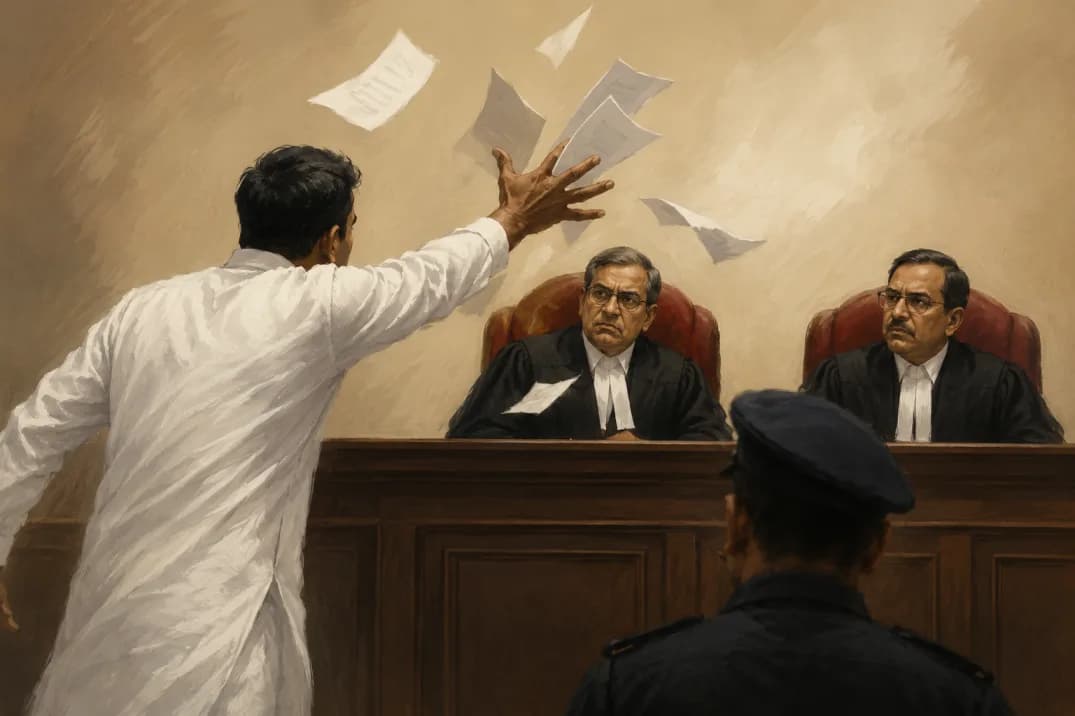






The Delhi High Court recently upheld the denial of promotions to two CRPF inspectors who had cleared every stage of the selection process but were declared medically unfit because of tattoos on their right forearms, their saluting arm.
Even getting the tattoos removed later wasn’t enough to save their promotions.
The court noted that since the tattoos existed and weren’t permissible under the revised guidelines, the officers were ineligible to be considered for promotion, adding that their eligibility had to be judged as of the last date for submitting their application.
The ruling has raised a bigger question for lakhs of government job aspirants: can a tattoo really cost you a government job? The answer depends on where you want to work, where the tattoo is, and what the recruitment rules say.
Also Read | ‘You have to respect the CM’: Madras HC denies DMK MLA bail over Joseph Vijay remarks
What was the case about?
The case involved two serving CRPF inspectors who appeared for the Limited Departmental Competitive Examination (LDCE)-2023 for promotion to the rank of Assistant Commandant.
Although they cleared every stage of the selection process, they were declared medically unfit because they had tattoos on their right forearms.
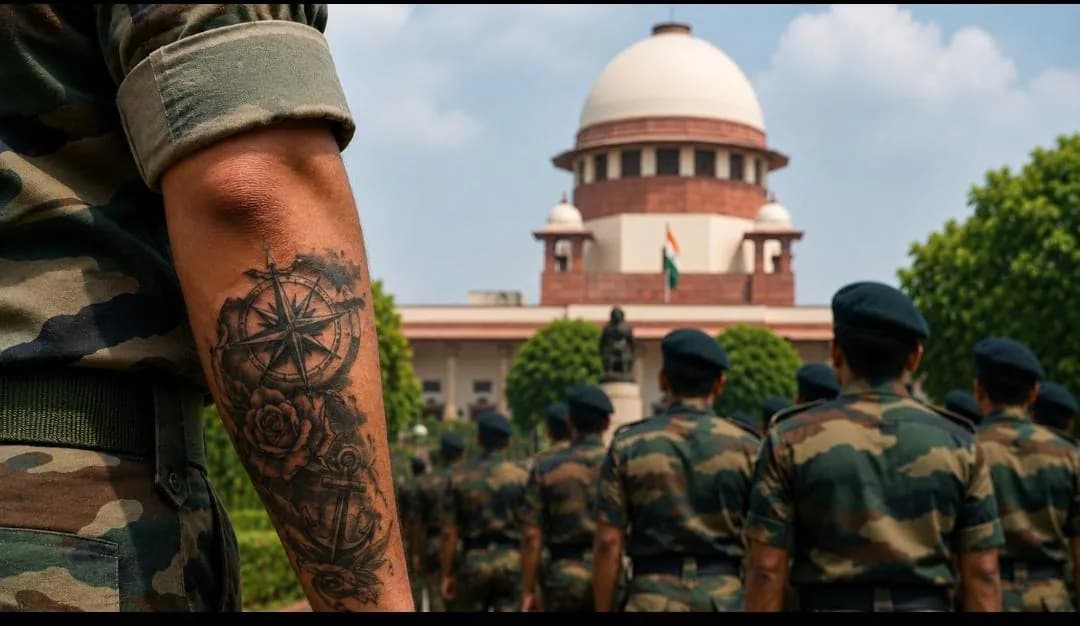
Under the Ministry of Home Affairs’ revised medical guidelines for the Central Armed Police Forces (CAPFs) and Assam Rifles, the right forearm is the saluting arm and is a prohibited spot for tattoos.
The officers argued that the tattoos had been there since they joined the CRPF, no one had objected to them before, and they got the tattoos surgically removed as soon as they were declared unfit.
They asked the Delhi High Court to consider the removal and allow their promotion. The court, however, refused.
Why the court rejected their plea?
The bench held that eligibility has to be assessed on the last date prescribed under the recruitment process, not after a candidate tries to fix a disqualification.
Since the tattoos existed when the officers applied for the promotion process, they were ineligible under the applicable medical guidelines.
Lawbeat reported that the judges also observed that members of a disciplined force can’t claim ignorance of the Ministry of Home Affairs’ medical standards.
Removing the tattoo later couldn’t erase the ineligibility that already existed at the relevant point in time. However, the court clarified that the officers are free to compete in the next promotion exam, now that the tattoos have been removed.
What do the tattoo rules actually say?
The MHA guidelines don’t impose a blanket ban on tattoos. Instead, they regulate where a tattoo can be located, how large it can be, and what it depicts.
Generally, tattoos are allowed only on the inner side of the left forearm (the non-saluting arm) or the back of the hand, as long as they’re of limited size and meet the prescribed standards. Tattoos on the right forearm, face, neck, or other visible body parts are generally not allowed for recruitment and promotion in CAPFs.
Why does the right arm matter so much?
CAPFs treat appearance and uniformity as part of military discipline.
The right arm is the saluting arm, making it highly visible during official duties and ceremonial functions. That’s why the guidelines prohibit tattoos on that limb, even though tattoos may be allowed elsewhere within set limits.
The high court accepted this distinction and held that the authorities were simply applying the existing rules.
Do all government jobs have the same tattoo rules?
No. Different government services have different recruitment rules.
CAPFs and Assam Rifles, for instance, have detailed tattoo regulations issued by the Ministry of Home Affairs. The armed forces also regulate tattoos, though the rules vary by service and type of entry.
Most civilian government jobs, such as UPSC civil services, SSC recruitments, banking jobs, or state government posts, don’t automatically disqualify candidates just for having a tattoo, unless a specific recruitment notification or service rule says otherwise.
What about the existing employees?
The two inspectors had been serving in the CRPF for years without their tattoos being an issue. But when they applied for promotion to a gazetted post, they had to meet the medical standards that applied to that promotion, not just the standards under which they had originally joined.
The court held that every promotion or fresh recruitment process can require candidates to meet the eligibility conditions that apply at that particular stage.
What should job aspirants keep in mind?
If you’re planning to apply for a government job, don’t assume tattoos are universally allowed or banned.
Read the recruitment notification and medical guidelines carefully. If you’re applying for the armed forces, CAPFs, or police services, check the rules on tattoo location, size, and content before getting inked.
Also remember that removing a tattoo after being found ineligible may not revive your candidature, since eligibility is often assessed on an earlier cut-off date, not the date you fix the issue.
Also Read | Supreme Court clarifies access to call records in divorce cases
FAQs
1: What did the Delhi High Court rule?
It upheld the denial of promotions to two CRPF inspectors who had tattoos on their right forearms, even after they got the tattoos removed.
2: Why were the officers denied promotion?
They had tattoos on their right forearm, the saluting arm, which is prohibited under MHA medical guidelines for CAPFs.