


















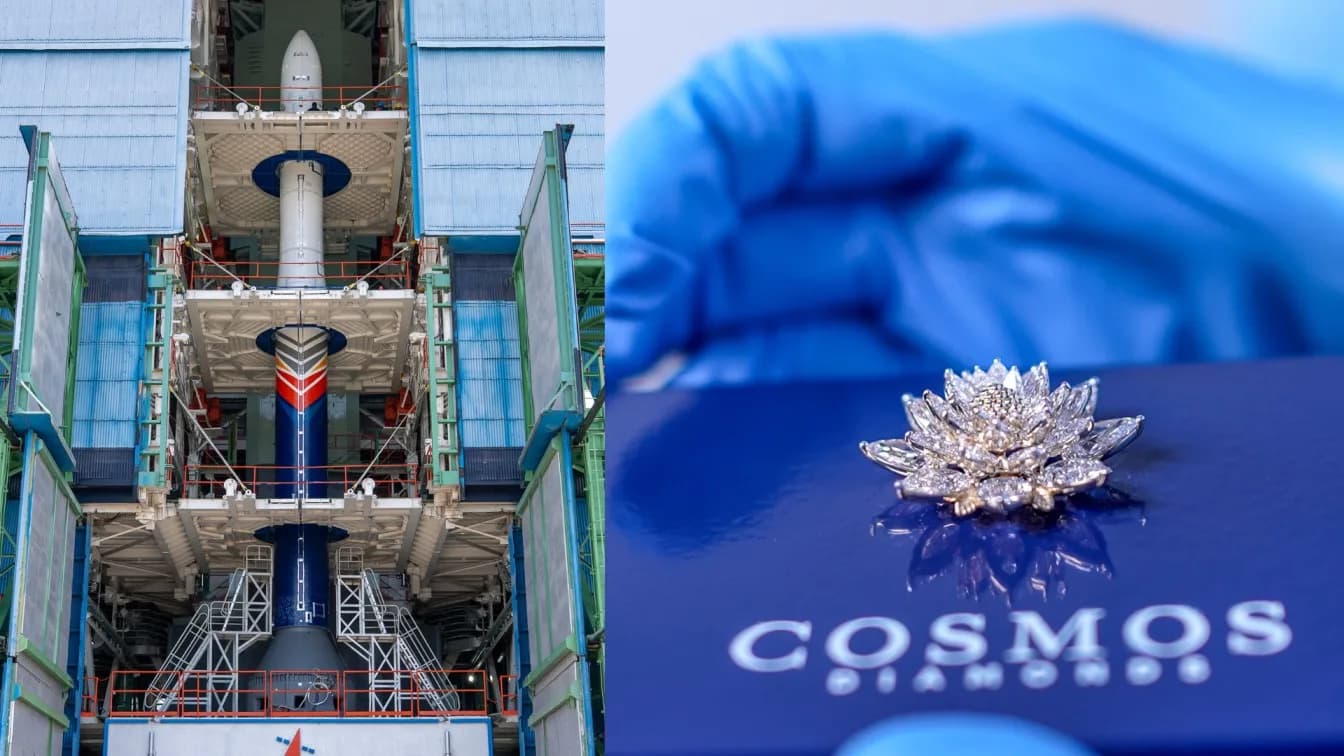
India’s private space sector is set for another milestone as Skyroot Aerospace prepares to launch its first orbital rocket, Vikram-1, from the Satish Dhawan Space Centre in Sriharikota. Besides attempting the country’s first privately developed orbital launch vehicle mission, the rocket will also carry diamonds and gold into space for the first time aboard an Indian launch vehicle.
The mission, named “Aagaman”, is expected to lift off during a launch window between July 12 and August 4, subject to weather conditions, technical clearances and regulatory approvals.
🚀 Announcing Vikram-1 Test Flight-1: Mission Aagaman, India’s first private orbital rocket launch.
— Skyroot Aerospace (@SkyrootA) July 2, 2026
📍 Satish Dhawan Space Centre, Sriharikota
🛰️ 450 km, 60 degree inclination, Low Earth Orbit
📅 Launch Window: July 12 – August 4, 2026
Vehicle is now fully stacked at India’s… pic.twitter.com/mqqJnO5RoI
Vikram-1 set for maiden orbital mission
Developed by Hyderabad-based Skyroot Aerospace, Vikram-1 is named after Dr Vikram Sarabhai, regarded as the father of India’s space programme. Founded by former ISRO scientists Pawan Kumar Chandana and Naga Bharath Daka, Skyroot has emerged as one of India’s leading private space companies.
Standing nearly seven storeys tall, the rocket has been built using advanced carbon composite structures and features 3D-printed rocket engines. It has been designed to carry payloads weighing up to 350 kg into Low Earth Orbit.
While the primary objective is to validate the rocket’s systems through its maiden flight, several unique payloads have attracted attention.
Payloads on a ride to space. 🚀
— Skyroot Aerospace (@SkyrootA) July 6, 2026
Vikram-1's Test Flight-1, Mission Aagaman, carries multiple technology demonstrations: @grahaaspace's SOLARAS S3 satellite, Cosmoserve Space's in-orbit robotic arm Embrace, an in-orbit demonstration from Germany's @DCUBEDspace, and Skyroot's own… pic.twitter.com/l1GoEuL19U
Diamonds and gold to fly aboard
One of the mission’s standout payloads is Cosmic Bloom, created by Cosmos Diamonds. It features an artistic diamond jewellery creation mounted on an aluminium base plate, marking the first time diamonds will travel into space aboard an Indian rocket.
The mission will also carry a miniature artwork called Microart, designed by artist Ajay Kumar Mattewada. The sculpture includes an 18-carat gold rocket carrying tiny figures of Nobel laureate Sir C.V. Raman, Dr Vikram Sarabhai and former President Dr A.P.J. Abdul Kalam.
Each figure is smaller than a grain of rice, serving as a tribute to three generations of Indian scientific leadership.
Flying alongside them: Cosmos Diamonds' artwork Cosmic Bloom, and a Microart by Ajay Kumar Mattewada — an 18K gold rocket holding micro-sculptures of Sir C.V. Raman, Dr. Vikram Sarabhai (Vikram-1's namesake), and Dr. A.P.J. Abdul Kalam, each smaller than a grain of rice. pic.twitter.com/gorfigyYCv
— Skyroot Aerospace (@SkyrootA) July 6, 2026
Technology demonstrations also on board
Beyond the artistic payloads, Vikram-1 will carry several technology demonstration missions.
Among the key experiments is Embrace, developed by Cosmoserve Space, which will demonstrate a robotic arm designed for future space debris removal missions. The robotic system will remain attached to the payload deck while carrying out planned operations in orbit.
The rocket will also fly payloads from Grahaa Space and Germany’s DCubed, reflecting growing international interest in India’s commercial launch ecosystem.
Skyroot will additionally test its in-house SCOPE payload, which is expected to generate engineering and performance data for future missions.
A key moment for India’s private space sector
For Skyroot, the mission is as much about collecting flight data as launching payloads. Engineers will closely monitor every phase of the mission, including lift-off, stage separation, propulsion performance, guidance systems and orbital insertion.
If successful, Vikram-1 will become the first privately developed Indian rocket to place payloads into orbit, marking a significant step for the country’s commercial space industry.
The mission also highlights how India’s private sector is expanding beyond satellite launches into advanced launch vehicle development, while opening space to scientific research, technology demonstrations and creative projects alike.
FAQs:
Why is the Vikram-1 mission historic?
It is expected to be India’s first privately developed orbital rocket mission and the first Indian rocket to carry diamonds and gold into space.
What payloads will Vikram-1 carry?
The rocket will carry diamond and gold artworks, a robotic arm technology demonstrator, payloads from Indian and international companies, and Skyroot’s own SCOPE experiment.