






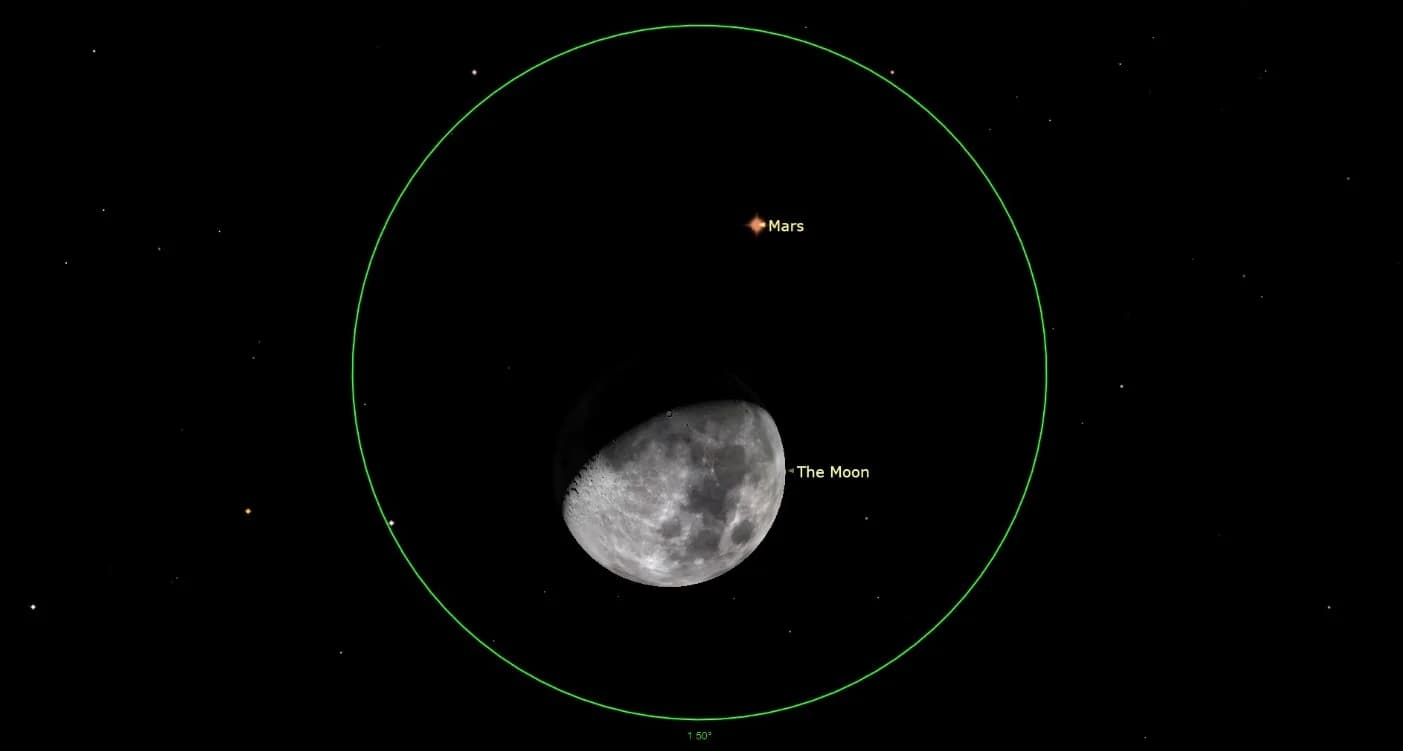


















Skywatchers are in for a celestial treat on July 12, when a rare planet parade will bring the Moon, Mars, Saturn and Uranus together in the pre-dawn sky. The event will be visible from many parts of the world, offering astronomy enthusiasts a chance to witness multiple celestial bodies appearing close together from Earth’s perspective.
According to NASA, the best time to observe the event will be before sunrise, when the waning Moon appears near Mars, Saturn and Uranus in the eastern to southeastern sky. While Mars and Saturn should be visible to the naked eye under clear conditions, Uranus will likely require binoculars or a small telescope because of its faint brightness.
What is a planet parade?
A planet parade is an apparent alignment in the night sky where multiple planets appear close to one another when viewed from Earth. Although they seem clustered together, the planets remain separated by millions or even billions of kilometres in space. The effect is purely a matter of perspective from our vantage point on Earth.
How to watch the July 12 sky event
To enjoy the best view, experts recommend heading to a location with minimal light pollution and an unobstructed view of the eastern horizon. Observers should begin looking about 45 to 60 minutes before local sunrise, when the sky is still dark enough for the planets to be visible.
Also Read | Hoax bomb threat sparks security scare at Delhi’s iconic Red Fort
Mars will appear with its characteristic reddish glow, while Saturn will shine with a steady golden hue. Uranus, however, will remain difficult to spot without optical aid.
Why this event is special
Although planetary alignments occur periodically, seeing the Moon positioned alongside three planets in the same part of the sky makes this a memorable sight for both experienced astronomers and casual stargazers. The event also comes during one of the best months of the year for skywatching, with favourable conditions for observing the Milky Way and several other celestial phenomena.
Also Read | Swiggy Instamart under FSSAI scanner after multiple food safety complaints
Experts advise checking local weather conditions before heading out, as cloud cover may affect visibility. Those with binoculars or telescopes may also enjoy a closer look at Saturn and Uranus during the event.
FAQs
When can I see the rare planet parade?
The celestial event will be visible before sunrise on July 12, when the Moon appears close to Mars, Saturn and Uranus in the eastern sky.
Can I see all the planets without a telescope?
Mars and Saturn should be visible to the naked eye under clear skies, while Uranus will generally require binoculars or a small telescope.