

















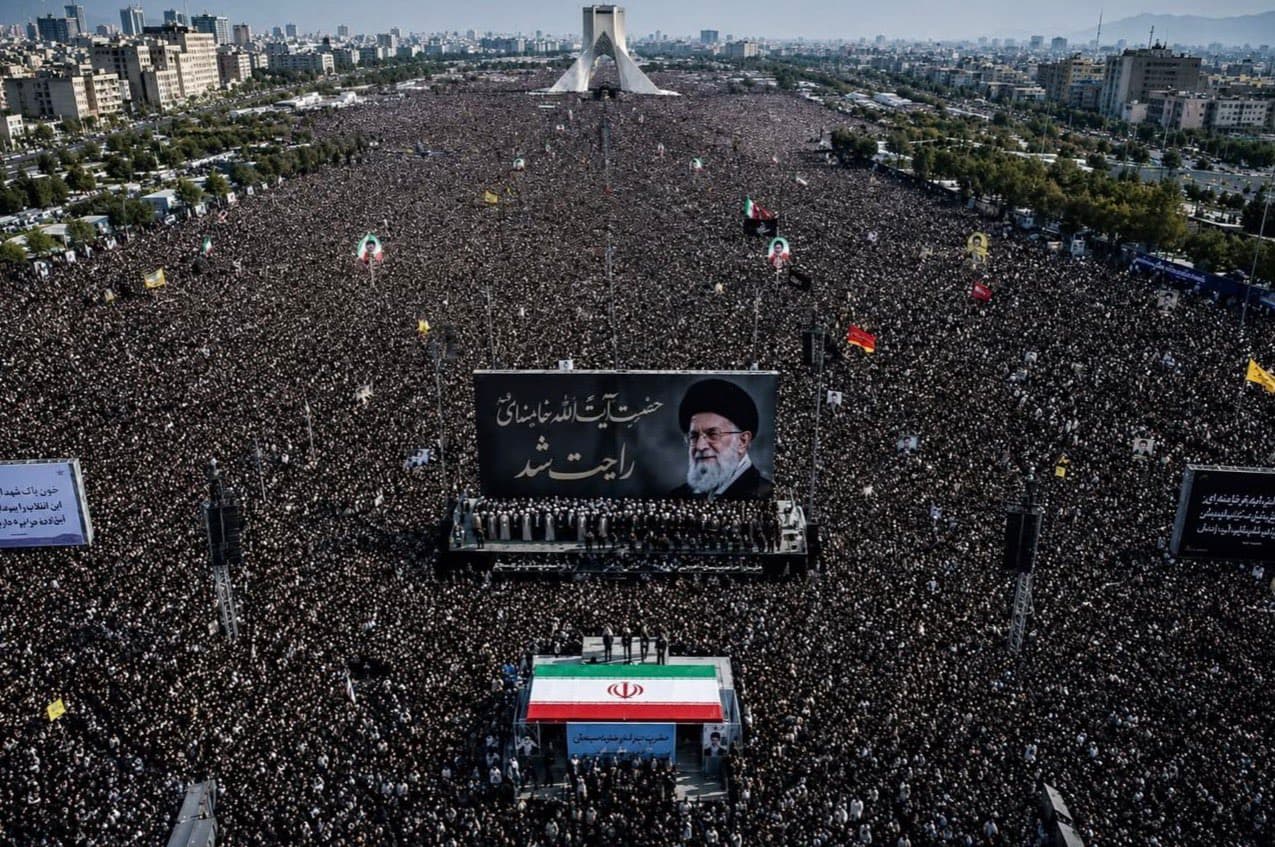
As Iran began funeral ceremonies for late Supreme Leader Ayatollah Ali Khamenei, authorities and state-linked institutions were allegedly pressuring workers, businesses and other groups to participate in large numbers.
A report by Iran International said the claims were drawn from several letters and messages it had received, describing what it called a coordinated effort involving workplace directives, business closures and logistical mobilisation ahead of the funeral and burial.
Also Read | US warns Poland of possible Russian border incursion to ‘test NATO’ amid Ukraine war
📰The Funeral That Exposed the World’s Hypocrisy: Who Showed Up in Tehran, Who Stayed Away, and the Real Price Paid by Iranians
— Mas Mas🇮🇷 (@MasMas2171) July 3, 2026
This historical tableau of the funeral procession at Tehran’s Musalla in July 2026 is a map of global hypocrisy, from dictators and terror financiers… https://t.co/ova0xtmIGo
A summons few dared to ignore
Among the allegations was a message from a Tehran resident who said the real estate union had told members they were not allowed to open their offices during the funeral days and were required to attend the ceremonies.
Another Tehran resident said Basij members had warned shopkeepers that businesses remaining open during the mourning period would be sealed.
In the resident’s words, “If we open during the funeral days, the shop will be sealed.”
Beyond the shopfront and into civic life
The pressure was not limited to private businesses. A message from Nahavand in Hamedan province said local officials had summoned charitable organisations and asked them to contribute to the funeral, warning that their work could be disrupted if they refused.
Another account said police and Basij members had gone to restaurants in an industrial town near Tehran and told owners to prepare thousands of free meals for mourners or face closure.
Allegedly, text messages had been circulated urging households to host visitors travelling to the capital for the ceremonies.
The extent to which a person is loved becomes clear on their final journey. Millions of people did not leave Ayatollah Ali Khamenei alone on his final journey, and the people of the Islamic Republic of Iran stood by their homeland and their leader. I assure you that no Western… pic.twitter.com/VWuy7Dq84P
— Aleksey The Great 🇷🇺🎖 (@aleksthgrt) July 4, 2026
Ceremony on a rather grand scale
At the same time, official announcements pointed to a large state-backed logistical operation around the funeral.
The Basij Organization for Guilds said 50 million loaves of bread were being prepared nationwide with the involvement of bakers’ unions, while 16 mobile bakeries were to be deployed across Tehran and surrounding areas to avoid shortages.
Funeral processions began in Tehran on Saturday and were scheduled to continue through Qom, Najaf and Karbala before Khamenei’s burial in Mashhad on July 9.
Authorities have also announced heightened security measures, including temporary airspace restrictions over Tehran and Mashhad during the ceremonies.
Also Read | Can’t pronounce ‘Semiquincentennial’? You’re not alone as America marks 250 years
FAQs
Q1: Did Iran force people to attend Ayatollah Ali Khamenei’s funeral?
Ans: Iran International claimed some workers, businesses and civic groups faced pressure to participate, but the allegations have not been independently verified.
Q2: Why are the claims about Khamenei’s funeral significant?
Ans: The report raises questions about whether turnout at the funeral reflected voluntary public participation or state-directed mobilisation.