























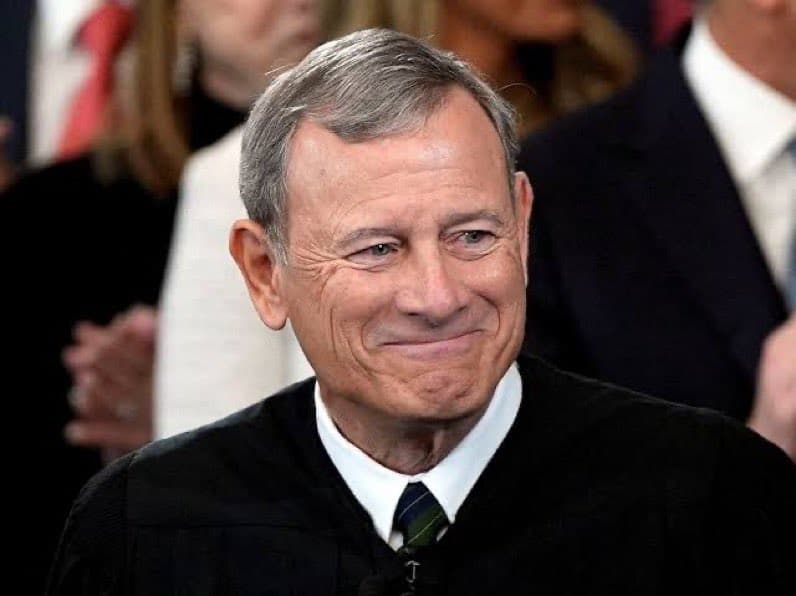
US Chief Justice John Roberts and President Donald Trump may be very different in style and temperament, but the Supreme Court’s latest term showed how often their interests can align.
Over the court’s nine-month term, which ended on Tuesday, Roberts wrote opinions that delivered Trump some of his biggest victories, including a ruling that gave the president broad authority to fire leaders of independent regulatory agencies.
At the same time, Roberts also authored three major decisions that went against Trump, underscoring that the court was not simply acting as an extension of the White House.
The term, in effect, produced a paradox. Trump gained when his agenda fit Roberts’ judicial priorities, but he lost when it collided with long-standing conservative principles that Roberts has helped shape over two decades as chief justice.
Also Read | Germany’s AfD re-elects leaders amid mass protests ahead of key state polls
A quiet revolution beneath the robes
The court’s rightward shift accelerated after Trump appointed three justices in his first term—Neil Gorsuch in 2017, Brett Kavanaugh in 2018, and Amy Coney Barrett in 2020—creating a conservative supermajority that has moved American law sharply to the right.
This has included decisions rolling back abortion rights and affirmative action, while expanding gun and religious rights and limiting the power of regulatory agencies.
In the latest term, that pattern continued with rulings that gutted a key part of the Voting Rights Act in April and struck down a campaign finance restriction on Tuesday. Syracuse University law professor Jenny Breen said the Voting Rights Act ruling reflected “a decades-long project for Chief Justice Roberts.”
The scales tip, though never too far
Roberts’ most consequential opinion for Trump was Monday’s 6-3 decision in Trump v. Slaughter, which overturned a 1935 precedent that had protected leaders of independent agencies from being removed at will by the president.
The ruling cleared the way for Trump to fire Federal Trade Commission member Rebecca Slaughter and was widely seen as a major expansion of presidential power.
On the other hand, Roberts also wrote the opinions that blocked Trump’s sweeping global tariffs, rejected his bid to remove Federal Reserve Governor Lisa Cook, and said his executive order seeking to deny birthright citizenship to some children of immigrants violated the Constitution’s 14th Amendment.
Legal scholars framed the pattern as one in which Trump wins only when his political aims overlap with the chief justice’s institutional and constitutional priorities.
“This term shows that Trump wins at the court only when his agenda coincides with Roberts’ agenda,” said John Yoo of UC Berkeley School of Law.
Principle proves the sterner master
The latest term also sharpened the distinction between Trump’s push for immediate political outcomes and Roberts’ broader project of strengthening executive authority within a conservative legal framework.
While Trump’s allies hailed decisions that advanced presidential power, the court’s losses for Trump showed that Roberts was not prepared to abandon doctrines he has backed for years, especially on the structure of government and the stability of financial and economic institutions.
Professors and former officials said Roberts’ recent rulings reflect both a long-running conservative agenda and a willingness to draw limits when Trump’s requests run into the court’s core jurisprudence.
The result is a court that can be both a powerful ally and a firm check, depending on the issue before it.
Also Read | Can’t pronounce ‘Semiquincentennial’? You’re not alone as America marks 250 years
FAQs
Q1: Why did the Supreme Court both support and reject Trump’s agenda?
Ans: The court backed Trump when his policies aligned with its conservative legal approach but ruled against him in cases that conflicted with constitutional or institutional principles.
Q2: What was the Supreme Court’s biggest ruling in Trump’s favour this term?
Ans: The court expanded presidential authority by allowing the president to remove leaders of certain independent federal agencies.