
























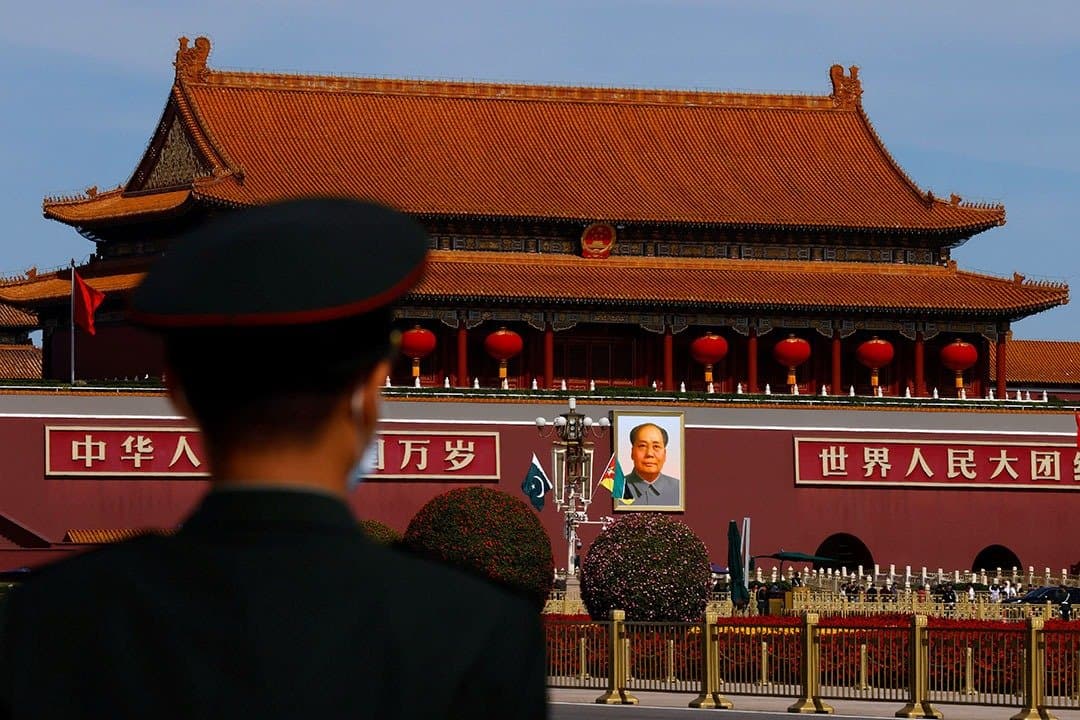
China has brought into effect a new ethnic unity law that is drawing sharp scrutiny from rights advocates and foreign officials, who say it could sharpen pressure on the country’s minority communities.
The law took effect on Wednesday, according to Al Jazeera, and arrives against a backdrop of long-running tension over Beijing’s treatment of ethnic minorities, including Tibetans and Uighurs.
China officially recognises 55 ethnic minority groups, which together make up 8.9 per cent of mainland China’s population, while the law is presented by the government as a framework to strengthen a shared national identity across all 56 ethnic groups, including the Han majority.
As the Human Rights Council convenes in Geneva, China reaffirms its commitment to protecting human rights through the rule of law.
“All citizens of the People’s Republic of China are equal before the law.”
“All ethnic groups in the People’s Republic of China are equal.… pic.twitter.com/EgGwsn796m— China Mission Geneva (@ChinaMissionGva) July 1, 2026
Also Read | India condemns demolition of 125-year-old gurdwara in Pakistan
Where language becomes the law’s first lesson
The legislation was passed on March 12 and is designed to foster “a stronger sense of community” among ethnic groups in the Chinese nation.
It requires government bodies and private enterprises to promote ethnic unity, and it places particular emphasis on language policy. Under Article 15, Mandarin Chinese must be taught to all children before kindergarten and throughout compulsory education up to the end of high school.
This effectively means minority languages cannot be the primary language of instruction nationwide, even though ethnic minorities had some autonomy over school language choices until recent years.
China’s Constitution says each ethnicity has the right to use and develop its own language and to self-rule, while the Law on Regional Ethnic Autonomy promises limited autonomy in some areas.
The critics are not amused
Critics argue the law could be used to narrow space for cultural expression and deepen assimilation. Amnesty International’s Sarah Brooks said Chinese authorities have human rights obligations to protect minority communities and their cultures, but that this law does the opposite.
She warned that it pushes groups such as Uighurs, Tibetans and Mongolians toward a single, state-defined identity dominated by Han Chinese culture and said activities such as promoting minority languages or documenting human rights abuses could face greater risk.
There are wider concerns over China’s record on ethnic policy, including the United Nations’ 2018 estimate that at least one million mostly Muslim Uighurs and other Turkic minorities were held in what Beijing called re-education centres, as well as the long exile of the Dalai Lama, whom Beijing has described as a separatist.
From today, the CCP thinks it has a legal basis to:
❌ Forcibly assimilate ethnic minorities.
❌ Criminalise dissent to protect “ethnic unity.”
❌ Target critics beyond its borders.
Following the EP resolution initiated by IPAC members, here is IPAC’s statement:… pic.twitter.com/tnBtwNm5BW— Inter-Parliamentary Alliance on China (IPAC) (@ipacglobal) July 1, 2026
A clause with rather distant ambitions
The most controversial part of the law may be its extraterritorial language. It states that people and groups outside China can be held legally accountable for undermining ethnic unity or inciting separatism, prompting concern in Taiwan that Beijing could use it as another tool against people it regards as separatists.
Taiwan’s foreign ministry warned that people from any country whose words or actions are unacceptable to China could become targets under the law, while the Central Tibetan Administration said the measure effectively codifies “forced assimilation”. Beijing has rejected those accusations.
Vice Justice Minister Hu Weilie said Western media had “distorted and misinterpreted” the provision and argued it is “legitimate, lawful, necessary and feasible”. He said the overseas clause is meant to guard against unlawful acts involving ethnic affairs and would not affect normal exchanges, academic discussions or trade cooperation.
Also Read | Trump takes maiden voyage on Qatar’s $400 million Air Force One gift
FAQs
Q1: What is China’s new ethnic unity law?
Ans: China’s new ethnic unity law is legislation that promotes a shared national identity and requires institutions to support ethnic unity, including expanding Mandarin-language education.
Q2: Why is China’s ethnic unity law controversial?
Ans: Critics say the law could weaken the cultural and linguistic rights of ethnic minorities and broaden Beijing’s authority over alleged separatist activities.