






















The US carried out a third round of military strikes on Iran on Sunday. This happened just hours after Iran said it was shutting down the Strait of Hormuz again, after a commercial ship taking an “unauthorised route” was hit with warning shots.
This new round of attacks is a major escalation between the two countries, and it’s putting even more pressure on the shaky ceasefire that was agreed last month.
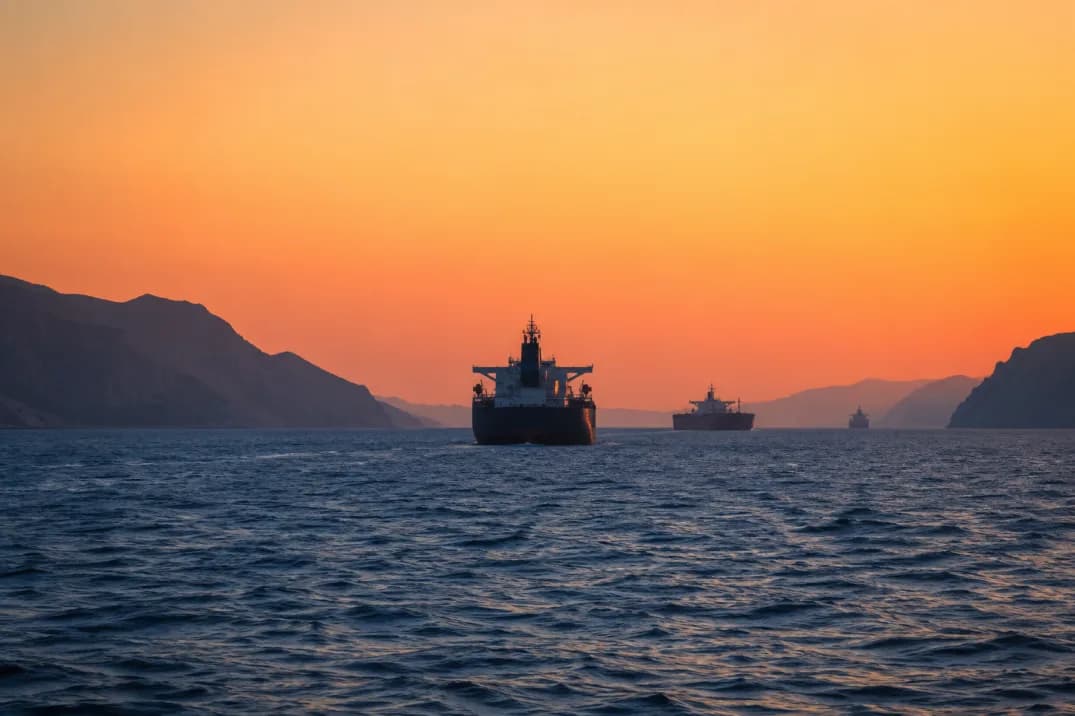
Reports say Iran announced the strait would stay closed after the ship, the one it says used an “unauthorised route”, was fired on with warning shots.
The US had already warned that if commercial shipping came under attack again, it would respond militarily. That’s exactly what happened.
Also Read | Syria’s first post-Assad parliament takes shape as constitutional process begins
US targets Iran’s ship-attack network
According to Axios, a US official said the latest strikes went after several parts of Iran’s system for attacking ships. The targets reportedly included air surveillance radars, missile and drone storage sites, missile and drone launch sites, surface surveillance radars, and surface-to-air missile launchers.
Officials said the goal was to knock out every major piece of Iran’s anti-ship setup, the radars that spot ships, the storage sites holding missiles and drones, the launch points used to fire them, and the air defenses guarding it all.
This marks the third round of US strikes this week. It follows an attack by Iran’s Revolutionary Guard Corps (IRGC) on a commercial ship, after which Iran declared the Strait of Hormuz closed.
CENTCOM said: “U.S. forces hit approximately 140 Iranian military targets with precision munitions launched by land- and sea-based fighter aircraft, drones, and naval vessels. Targets included Iranian missile and drone sites, naval capabilities, ammunition storage facilities, communication networks, and coastal surveillance locations. During three nights of strikes this week, CENTCOM has struck more than 300 targets at the direction of the Commander in Chief to degrade Iran’s ability to attack civilian mariners and commercial vessels freely transiting the strait. Commercial vessel transits through the vital international maritime corridor continue.”
Blasts reported across the south
Reports say the strikes stretched across a wide area, from Asaluyeh to Bushehr, with unconfirmed reports of air defence activity over Tehran as well.
At least 10 large explosions were reported in Bandar-e-Jask. US airstrikes also hit Asaluyeh in southern Iran, with more strikes in Bushehr. Asaluyeh matters a lot here, it’s the onshore hub for the South Pars gas field, one of the most important pieces of Iran’s energy sector.
The strikes followed soon after the IRGC Navy targeted a commercial ship, declared the Strait of Hormuz closed, and effectively dared Washington to respond.
US officials had already warned this was coming. Before the latest operation, they said: “If they keep on shooting at ships… we’re going to hit ’em back.”
Why did the Strait of Hormuz become the sticking point again?
According to News 18, the latest escalation kicked off after Iran declared the Strait of Hormuz closed again, following the incident involving a commercial ship.
This waterway isn’t just any shipping route, it’s one of the busiest in the world and critical to global oil and natural gas supplies.
Senior US officials had already said talks to strengthen last month’s ceasefire couldn’t move forward unless the strait stayed secure. Washington also wanted Iran to publicly confirm that international shipping could keep moving through safely.
Instead, Iran did the opposite, announcing that the strait would stay closed until further notice.
Oman’s two-lane proposal
Even with military action heating up, diplomacy hasn’t stopped.
According to reports, Iranian Foreign Minister Abbas Araghchi is heading back to Iran with a proposal from Oman on how to manage traffic through the Strait of Hormuz.
The idea, reportedly, is to split the waterway into two separately controlled shipping routes. The southern corridor would stay open for international shipping, while the northern lane would need Iran’s approval before any ship could use it.
No ships would have to pay a toll under this plan so even as both sides keep one hand on military options, the other hand is still on the negotiating table.
Also Read | Iran declares Strait of Hormuz closed after US strikes; CENTCOM says ‘Traffic is flowing’
FAQs
Q1: Why did the US strike Iran again?
Iran’s IRGC hit a commercial ship and closed the Strait of Hormuz. The US had warned it would retaliate if shipping was attacked.
Q2: How many targets were hit?
About 140 this round, per CENTCOM, over 300 across three nights this week.