




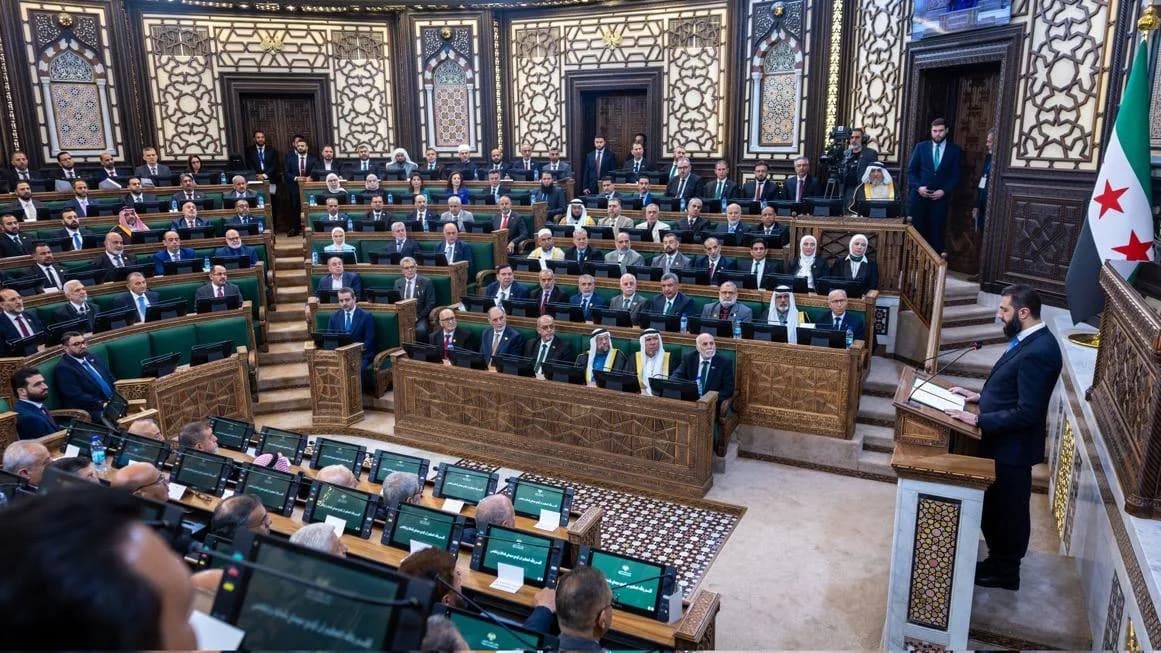











Syria’s new parliament convened in Damascus on Sunday for its inaugural session, 19 months after rebels led by President Ahmed al-Sharaa toppled Bashar al-Assad, in a development seen as a milestone in the country’s political transition.
The assembly, which operates under a temporary constitutional arrangement, met with limited powers but is expected to become one of the main institutions shaping Syria’s next political phase.
Also Read | Lindsey Graham’s death triggers South Carolina Senate race: Who’s in the running?
Syria's People's Assembly convened in Damascus today for the first time since the fall of the Assad regime. Under the country's interim governing arrangements, two-thirds of the 210 MPs were chosen last year by regional electoral colleges, while President Ahmed al-Sharaa named… pic.twitter.com/SvEfZzA9Hm
— Ariel Oseran أريئل أوسيران (@ariel_oseran) July 12, 2026
The chamber takes shape, old order left behind
The chamber has 210 seats, but four remained vacant as the first session began, including three reserved for the predominantly Druze province of Sweida and one left empty after a lawmaker died.
Two-thirds of the members were chosen last year by regional electoral colleges, while al-Sharaa appointed the remaining third on July 1.
The selection process has drawn criticism from opponents, who say it gave the executive branch extensive control, though officials have argued the system was necessary because years of war displaced millions and left voter rolls and population records unreliable.
🇸🇾 Syria’s first parliament since Assad’s fall just convened in Damascus.
— Mario Nawfal (@MarioNawfal) July 12, 2026
After 13+ years of brutal civil war and Assad’s ouster in Dec 2024, transitional President Ahmed al-Sharaa (ex-HTS) is pushing a new 210-seat assembly. He plans a mix of indirect elections and his…
Grand ambitions, measured authority
In his address to lawmakers, al-Sharaa said they should “make this council a model of responsibility and competence” and called it “a platform for truth and justice.”
He added, “Syria is writing a glorious history that reflects its heroism, and we face the responsibility of building both the nation and the individual.”
Under the temporary constitutional declaration adopted in 2025, parliament can propose and approve laws, but it has limited authority in a presidential system and does not require the government to win a confidence vote.
The assembly has a renewable 30-month term and will retain legislative authority until a permanent constitution is adopted and elections are organized.
𝗦𝘆𝗿𝗶𝗮'𝘀 𝗣𝗲𝗼𝗽𝗹𝗲'𝘀 𝗔𝘀𝘀𝗲𝗺𝗯𝗹𝘆 𝗖𝗼𝗺𝗽𝗹𝗲𝘁𝗲𝘀 𝗜𝘁𝘀 𝗣𝗿𝗲𝘀𝗶𝗱𝗲𝗻𝗰𝘆
— Levant24 (@Levant_24_) July 12, 2026
📌 Muayad Habib was elected Secretary of Syria's People's Assembly during its first session in Damascus, completing the formation of the assembly's executive bureau.
📌 Born in… https://t.co/cWlAk2fq89 pic.twitter.com/g63i4ojrCU
Can this parliament deliver Syria’s promised political transition?
The new legislature is also expected to form a committee to draft a permanent constitution, a task al-Sharaa has said will be central to Syria’s transition.
Abdel Halim al-Awak, a member of the committee that drafted the constitutional declaration, was elected speaker with 99 votes, and the chamber includes 21 female lawmakers.
Officials have said al-Sharaa supports holding general elections once infrastructure and documentation allow, but for now the parliament stands as one of the clearest signs of how Syria’s post-Assad order is being rebuilt.
Also Read | Trump’s Patriot promise puts focus on the world’s most sought-after air defence system
FAQs
Q1: Why is Syria’s new parliament significant after Bashar al-Assad’s overthrow?
Syria’s new parliament marks a key step in the country’s political transition and is expected to help draft a permanent constitution.
Q2: How was Syria’s new parliament formed?
Two-thirds of the lawmakers were selected by regional electoral colleges, while President Ahmed al-Sharaa appointed the remaining one-third.