




















Trump announced the plan during the NATO summit in Ankara, telling Ukrainian President Volodymyr Zelensky that Washington would “give a license” for Ukraine to make Patriots.
He said the arrangement would let Kyiv build the weapons itself while also suggesting some interceptors could be supplied immediately.
The announcement marked another reversal from Trump’s earlier skepticism toward Ukraine, though he gave no timeline, production details, or clarity on how the licensing model would work.
Also Read | Spain wildfire kills 12, leaves 19 missing as blaze rips through southern Spain
🚨 NOW: President Trump announces he is giving UKRAINE the license to make PATRIOT MISSILES
— Eric Daugherty (@EricLDaugh) July 8, 2026
"This way, [Zelensky] can't complain we're not giving him enough! MAKE 'EM YOURSELF!" 🔥
"You'll figure out the complexity quickly. The company that makes them…we're gonna give a… pic.twitter.com/mzCSg1xKea
A shield worth its weight in gold
Patriot is among a small number of systems worldwide—and the only one of its kind in Ukraine—capable of shooting down ballistic missiles, which are fast, steeply descending, and difficult to intercept.
Russia has sharply intensified such strikes in recent months, including attacks that killed dozens in Kyiv in the past week, while Ukraine’s air force has said it faces a serious shortage of interceptors.
In one recent attack, it failed to shoot down any of 23 ballistic missiles fired by Russia.
🇺🇦🇷🇺 Ukraine may have hit the nightmare scenario Zelensky's been fearing: Kyiv appears to be out of Patriot interceptors.
— Mario Nawfal (@MarioNawfal) July 11, 2026
For two missile attacks in a row, the Patriots have been completely silent.
Zero observed launches, and zero missile interceptions.
If the reports are…
A licence granted, but not without strings
Trump acknowledged the constraint in blunt terms, saying, “We have Patriots, but we don’t have that many.”
He also said he believed Ukraine could ramp up production quickly once the technology and corporate support are arranged.
The system’s technology is tightly controlled by Washington. Raytheon builds the core system, Lockheed Martin makes the PAC-3 interceptor, and no country can produce Patriot without US approval.
Experts warned that manufacturing on Ukrainian soil would be difficult because the equipment is highly sophisticated and Ukraine remains vulnerable to Russian strikes.
One possibility being discussed is a facility in Europe, which would also align with a US plan to set up a PAC-3 maintenance center there.
🇺🇦🇺🇸Ukraine Gains U.S. License for Patriot Missiles But Domestic Production Remains Years Away
— Global Surveillance (@Globalsurv) July 12, 2026
Ukrainian officials say actual production is very complex as it would likely take years to set up factories, train workers, and secure parts especially during an active war.… pic.twitter.com/vFctQV2ywq
How much does a Patriot missile system really cost?
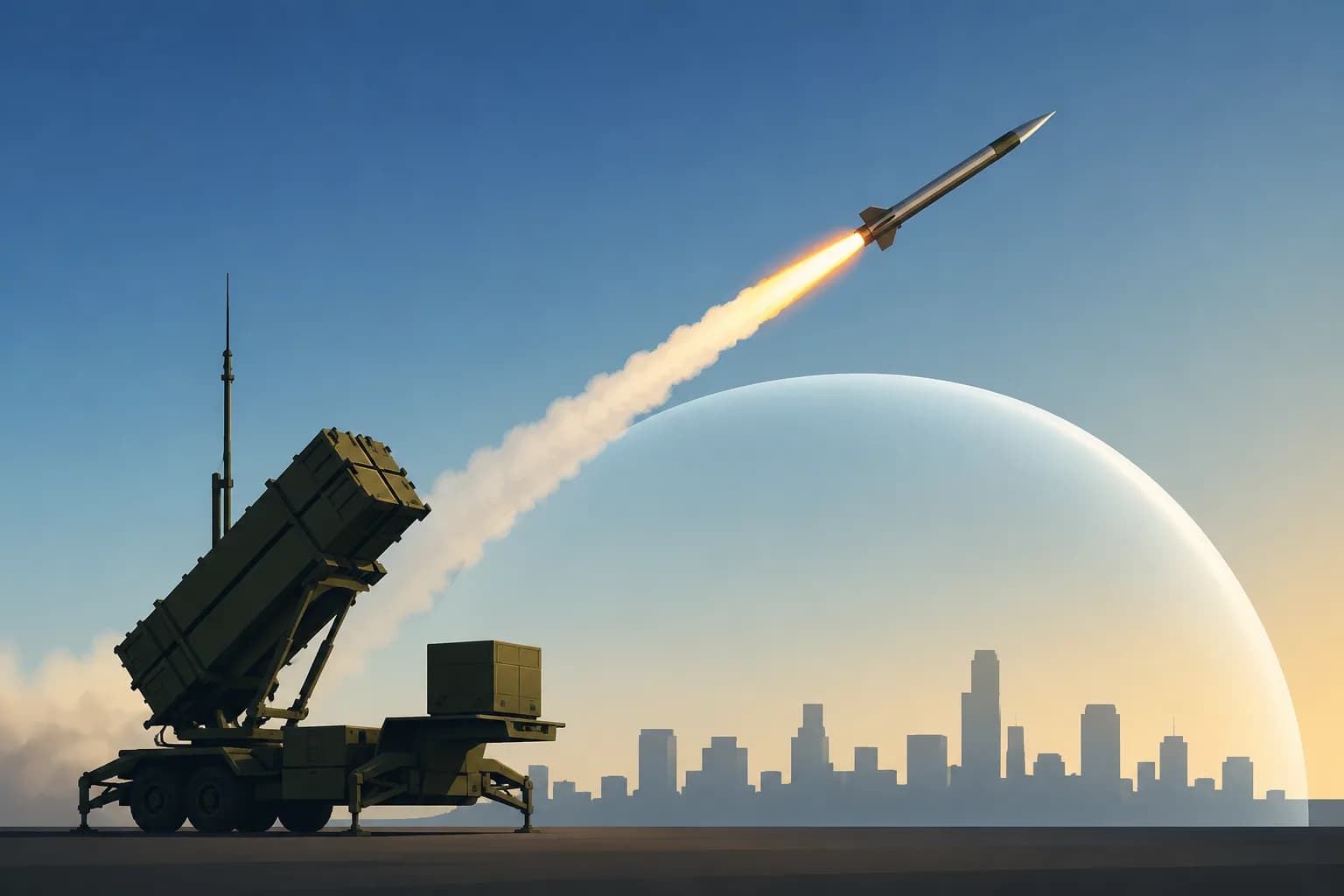
Patriot, short for Phased Array Tracking Radar for Intercept on Target, is a mobile air-defense system built to detect, track, and destroy incoming missiles and aircraft before they reach their targets.
A battery typically includes a radar, a command station, launchers, a power generator, and support vehicles, and the radar can detect threats from more than 150 kilometers away.
The system fires PAC-2 missiles, which destroy targets with an explosive blast and fragments, and PAC-3 interceptors, which use hit-to-kill technology by striking targets directly at high speed.
That capability comes at a steep cost: a new battery is estimated to cost more than $1 billion, while a PAC-3 MSE interceptor costs about $4.1 million apiece.
Production is also slow, with the US Department of Defense estimating annual output at roughly 600 Patriot missiles, a pace that leaves Washington balancing Ukraine’s needs against its own readiness.
Also Read | Lindsey Graham’s death triggers South Carolina Senate race: Who’s in the running?
FAQs
Q1: Why is the Patriot missile system important for Ukraine?
The Patriot missile system is one of the few air-defence systems capable of intercepting ballistic missiles, making it crucial for protecting Ukrainian cities and infrastructure.
Q2: Why is it difficult to replace Patriot missiles?
Patriot interceptors are expensive, produced in limited numbers and rely on advanced technology that requires US approval and specialised manufacturing.