
















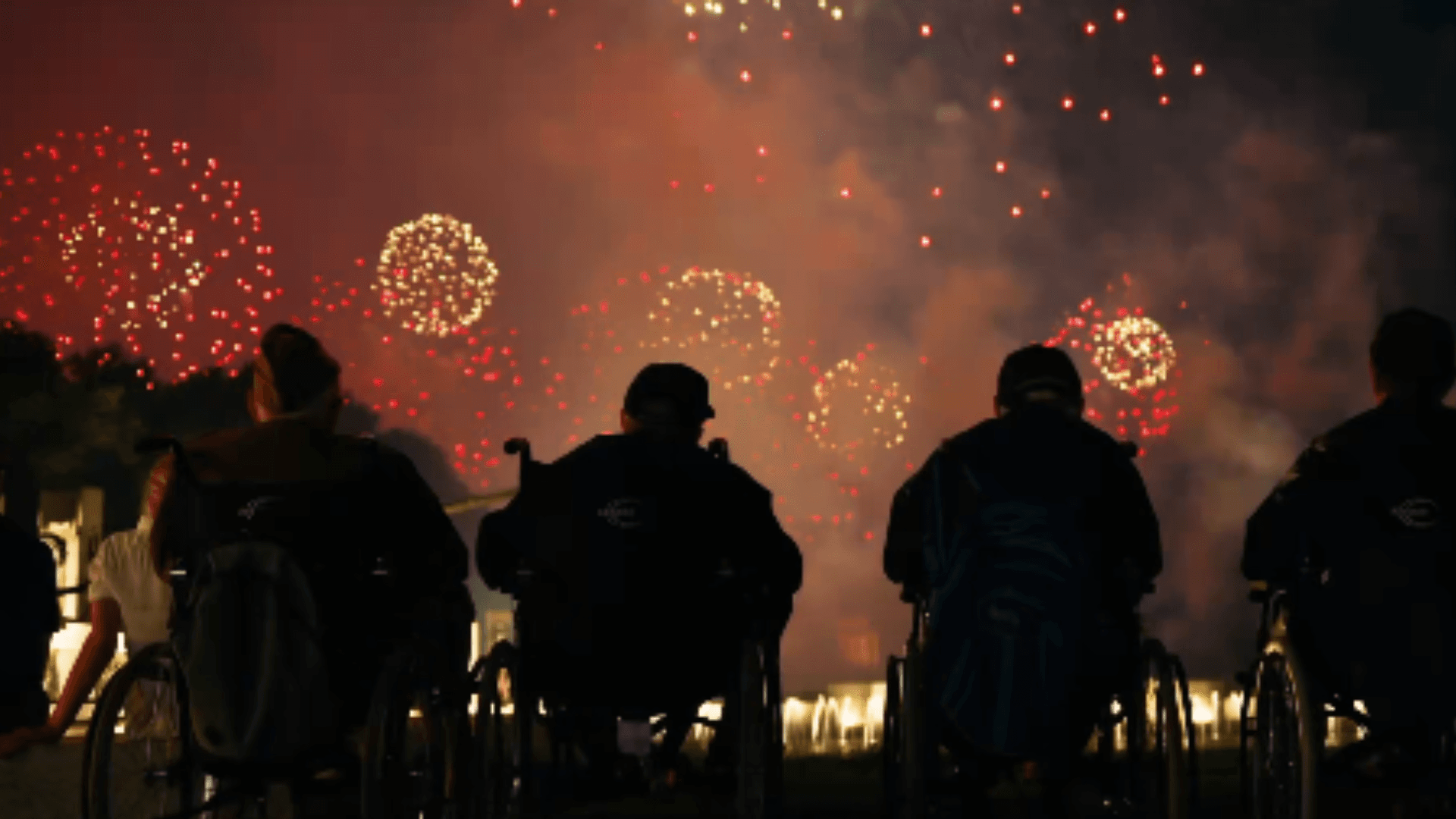
Washington briefly emerged as the world’s most polluted major city after a massive fireworks display organised as part of the Trump administration’s Freedom 250 celebrations, according to data from IQAir.
The display took place on July 4 to mark the United States’ Independence Day. Pyrotecnico, the company behind the event, had planned to set a new world record by launching around 850,000 fireworks during a 40-minute show.
The celebrations came as parts of the US experienced a record-breaking heat wave, disrupting many traditional Independence Day events, including parades, outdoor gatherings and barbecues.
BREAKING: This is the smog in Washington DC this morning after Trump’s 5th of July fireworks display.
— Brian Krassenstein (@krassenstein) July 5, 2026
Note that he used six times the number of shells as a typical Washington DC Independence Day show, costing taxpayers six times as much money.
This isn’t patriotism, it’s…
Fireworks send pollution levels soaring
The fireworks show, delayed by more than an hour because of a thunderstorm, began shortly before midnight. Air quality in Washington started deteriorating during local fireworks displays and worsened significantly once the main event got underway.
PM2.5, or fine particle pollution, reached hazardous levels as smoke spread across parts of the city. These tiny particles can travel deep into the lungs and are associated with both short-term health effects and long-term illnesses.
One monitoring station recorded PM2.5 concentrations above 200 micrograms per cubic metre, well above the US Environmental Protection Agency’s 24-hour standard of 35 micrograms per cubic metre.
Air quality alerts classified as “Code Purple”, indicating very unhealthy air for everyone, were issued across large parts of Washington as well as nearby areas of Virginia and Maryland.
According to IQAir, Washington ranked as the world’s most polluted major city between around 3 am and 5 am on July 5. Air quality has since improved, and cities including Jakarta, Kinshasa and Addis Ababa are now among the most polluted.
Fireworks celebrations caused sharp air quality changes across several major U.S. cities this July 4. Swipe to see how pollution levels shifted and click the link below to learn more about the air quality impact of fireworks. #fireworks #july4 #usa #airquality… pic.twitter.com/zGp1zDe9hz
— IQAir (@IQAir) July 6, 2026
Record attempt under review
EPA spokesperson Brigit Hirsch defended the celebrations, saying “fireworks are awesome” and that people had enjoyed the displays across the US capital region.
Scientists said rainfall played a key role in clearing the smoke. Russell Dickerson, an atmospheric scientist at the University of Maryland, said the situation could have been been worse without the rain.
Meanwhile, Pyrotecnico’s attempt to break the record for the world’s largest fireworks display remains under review. The current Guinness World Record was set in the Philippines in 2016 with about 811,000 fireworks. Guinness World Records said it had received an application but has not yet confirmed whether a new record was achieved.
FAQs:
Why did Washington become the world’s most polluted major city?
Smoke from the Freedom 250 fireworks caused a sharp rise in PM2.5 pollution levels.
Did the Freedom 250 fireworks break the world record?
Guinness World Records has received the application but has not yet confirmed the result.