



















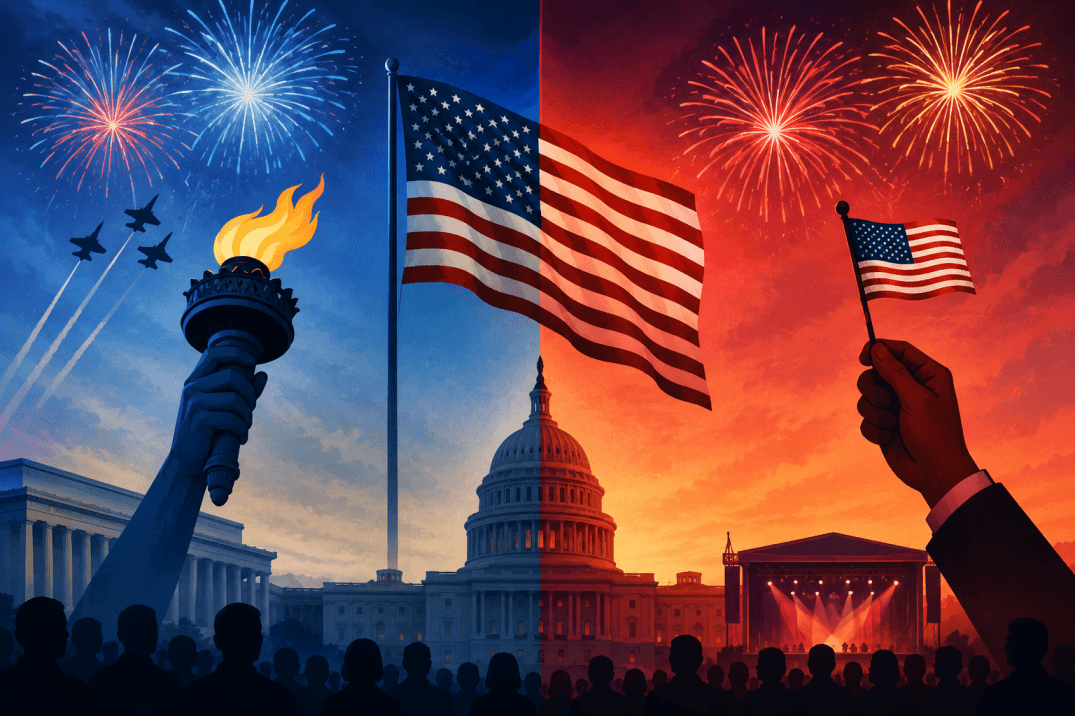
The United States is celebrating the 250th anniversary of the Declaration of Independence with a sweeping program of events that includes concerts, state fairs, military flyovers, ceremonies and what organisers say will be the largest fireworks display ever staged in the country.
US Congress has allocated $150 million in federal funding for the milestone, with the official America250 commission receiving $25 million so far, while federal records show the Interior Department has directed more than $68 million through the National Park Foundation to support events tied to Freedom 250, a separate Trump-backed initiative.
The two parallel structures have turned the semiquincentennial into more than a national birthday. They have made it a test case for how public money, private fundraising and political branding intersect in a year of national symbolism.
Also Read | Ali Khamenei funeral: Why Iran delayed burial for four months
The United States celebrates its 250th anniversary, marking two and a half centuries of history, resilience, and progress. #Happy250 #America250 #USA #UnitedStates #Independence #History #Celebration #Freedom #FourthOfJuly #Patriotism pic.twitter.com/7fKlekUKgS
— The World Reviews (@tworldreviews) July 3, 2026
A tale of two celebrations
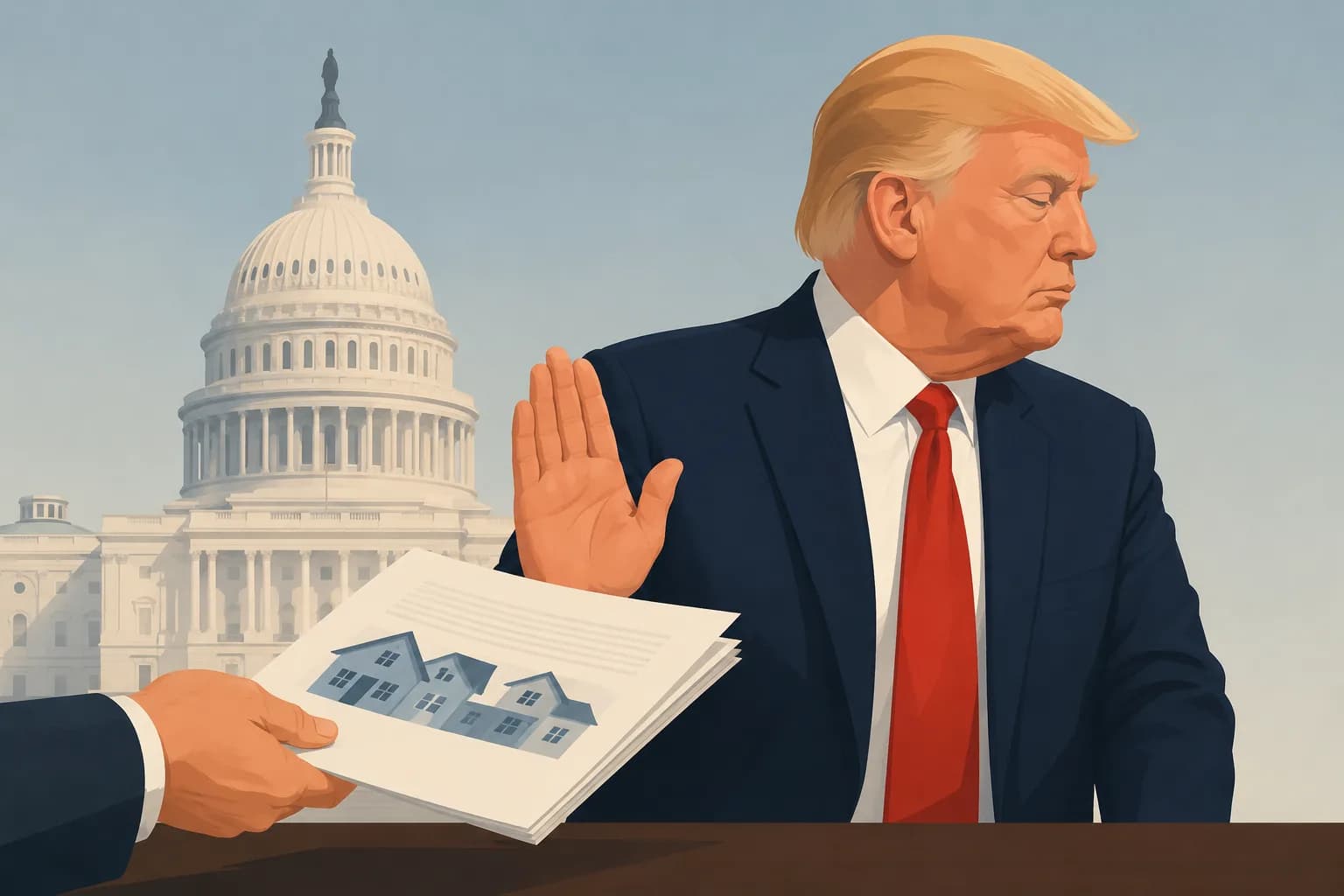
At the centre of the dispute is Freedom 250, a public-private partnership created under the Trump administration after the White House set it up last year despite the existence of America250, the congressionally chartered commission that had already spent years planning the anniversary.
Trump opened the 16-day celebration with a rally on the National Mall and is using the July 4 moment to project his own political image. Democrats have accused Trump-linked fundraisers of misleading donors who thought they were giving to America250.
Freedom 250 has rejected those allegations, calling them false and a “partisan smear”, and Trump allies say the effort is intended to create a unified national celebration. Several musicians withdrew from a planned concert series while the US Mint is planning a commemorative gold coin bearing Trump’s likeness.
Every American should be outraged by what Trump has done to our nation’s 250th birthday celebration. What should have been a once-in-a-generation moment to unite the country has been turned into another vehicle for division, propaganda, and political gain.
— Rep. Jared Huffman (@RepHuffman) July 2, 2026
We uncovered how he… pic.twitter.com/sSQrbMBCXx
Beneath the bunting, a divided chorus
Public reaction, however, appears far more fractured than celebratory. An Ipsos poll found that one in five Americans say they will not celebrate Independence Day this year, including a quarter of Democrats and 8% of Republicans, while two in five said they do not believe the country will survive another 250 years.
In Bucks County, Pennsylvania, a political split that mirrors the national mood was found. Some residents see the anniversary as a historic reason to gather, while others view the Trump-heavy framing as a reason to step back.
“I don’t want to be at the same party with people feeling enthusiastic about where our country is going,” one resident, Betsy Halsey, told Reuters, while another, Tabitha Dell’Angelo, said the current version of the celebration “does not feel like it’s about America but instead a celebration of Trump.”
Yale historian Beverly Gauge said, “The very idea of celebrating has become political and partisan.”
Drone operator sends 2,500 drones into the air for a drone show celebrating America’s 250th birthday in North Richland Hills, Texas.
— Collin Rugg (@CollinRugg) July 3, 2026
“…For America 250, we celebrate in style!” said Sky Elements Drones.
Remarkable. pic.twitter.com/Uk6zTeAPFV
The history debate
The argument over the nation’s birthday is also playing out in museums and historic sites, where curators and historians say the fight is not only about spectacle but also about memory.
Slavery-related panels were removed from Philadelphia’s President’s House exhibit after a Trump executive order targeting what it called “divisive ideology” before a legal battle led to the panels being ordered back and then later allowed to be removed again.
Critics say such changes risk sanitising American history, while administration officials argue they are restoring balance and emphasising the nation’s founding ideals.
Even so, large institutions are pressing ahead with semiquincentennial programming, and organisers still expect the July 4 finale in Washington to feature a 40-minute fireworks show with more than 860,000 fireworks, alongside nationwide events from Times Square to Philadelphia and Los Angeles.
Also Read | Is July 3 a federal holiday? Here’s what’s open and closed before July 4
FAQs
Q1: What is America250?
Ans: America250 is the official congressionally chartered commission established to coordinate events marking the 250th anniversary of the United States’ Declaration of Independence.
Q2: Why is the US 250th Independence celebration controversial?
Ans: The celebrations have sparked debate over federal funding, competing organising bodies, and political disagreements about how America’s history should be presented.