
























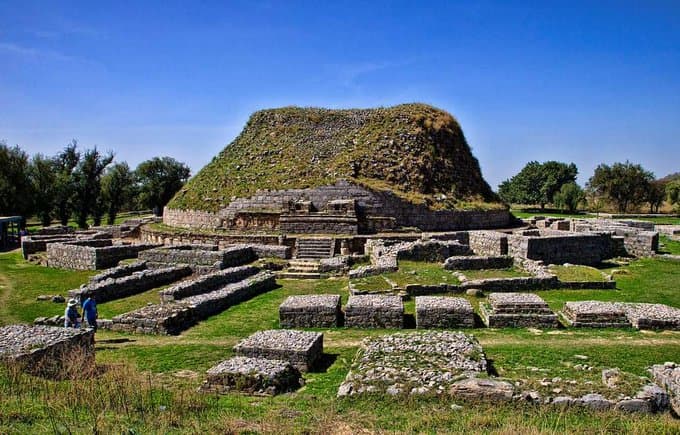
UNESCO has warned Pakistan over conservation work carried out at parts of the historic Taxila World Heritage Site, cautioning that the archaeological complex could be placed on its World Heritage “danger list” if concerns about the site’s authenticity and integrity are not addressed.
According to a report by Pakistan’s Dawn newspaper, officials from the United Nations Educational, Scientific and Cultural Organization (UNESCO) raised concerns during recent discussions with senior Pakistani authorities over interventions undertaken at the Mohra Moradu and Sirkap archaeological sites.
Also Read | Mojtaba Khamenei to ‘remain absent’ from Ali Khamenei’s funeral ceremonies: Report
The UN cultural agency reportedly described the work as “unnecessary interventions” that had undermined the authenticity and integrity of the heritage structures.
UNESCO seeks reversal of disputed work
According to the Dawn report, UNESCO has asked Pakistan to reverse the disputed interventions and warned that failure to do so could lead to Taxila being placed on the World Heritage “danger list” and potentially jeopardise its heritage status.
The concerns were reportedly triggered after a visitor wrote to Pakistan’s Permanent Delegate to UNESCO in Paris earlier this year, sharing photographs and details of restoration work carried out by the Punjab archaeology department.
The complaint alleged that original structures had been altered, with some walls replaced using modern construction materials and others having their height increased.
Photographs cited in the report reportedly showed visible differences between ancient masonry and newly added materials, with critics arguing that the interventions compromised the site’s historical authenticity.
Pakistan defends conservation efforts
Pakistan’s Punjab archaeology department has rejected suggestions that reconstruction work was carried out improperly.
According to Dawn, Punjab archaeology department Director General Malik Zaheer Abbas said the work undertaken at Mohra Moradu and Sirkap was based on internationally accepted conservation principles.
“The interventions being undertaken are conservation measures based on internationally accepted conservation principles, with the primary objective of stabilising vulnerable archaeological remains, preventing further deterioration, and preserving the authenticity and integrity of these World Heritage properties,” Abbas was quoted as saying.
He further stated that the work should not be described as “reconstruction” and insisted there was no question of reversing conservation efforts currently underway.
Why Taxila matters
The city of Taxila, located in the Punjab Province of Pakistan, is one of the most important archaeological locations in South Asia and has been inscribed as a UNESCO World Heritage Site since 1980.
It consists of remains dating back to different eras, such as Mesolithic cave, four ancient settlements, Buddhist Monasteries, and Islamic religious buildings.
Also Read | Friedrich Merz rolls out Germany’s biggest reform push with tax cuts and pension overhaul
As per the information provided by UNESCO, Taxila illustrates urban development in the Indian subcontinent for over five hundred years and continues to be an important center of Buddhist, Hindu, and Islamic cultures.
Last month, a team from UNESCO, Department of Archaeology and Museums (DOAM), and Ministry of National Heritage and Culture performed a joint technical visit to the Taxila Museum and adjacent archaeological sites.
The organisation has asked for proper documentation of conservation and restoration activities at Mohra Moradu and Sirkap.
FAQs
Q1. Why has UNESCO issued a warning to Pakistan regarding Taxila?
There have been reports suggesting that UNESCO has issued a warning to Pakistan for any damage caused to the authenticity and integrity of the World Heritage Site through conservation efforts.
Q2. Can Taxila lose its UNESCO World Heritage status?
As per reports, UNESCO has warned that Taxila can be on the World Heritage “danger list” if its concerns are not addressed.